



What's Happening?
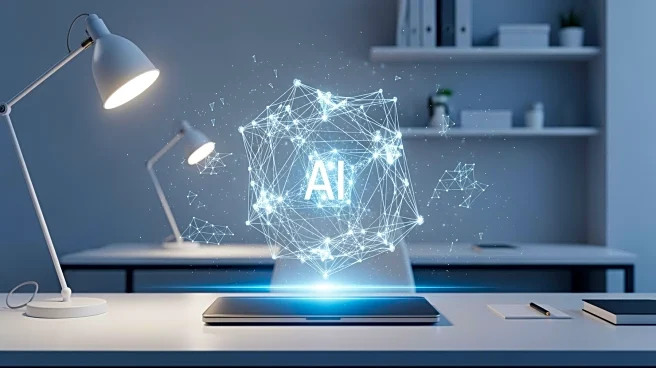
At the recent SMC3 Jump Start conference, Mark Albrecht, vice president of artificial intelligence and enterprise strategy at C.H. Robinson, discussed the transformative impact of agentic AI on logistics operations. Albrecht highlighted a shift from traditional
software-driven workflows to agentic AI systems that can independently reason and execute tasks. This evolution marks a departure from the previous model where humans were the primary decision-makers, even with computer-aided processes. The new AI systems are capable of determining next steps and executing tasks autonomously, which requires a new kind of leadership and organizational structure. C.H. Robinson has already seen benefits such as improved digital integration and increased automation rates, with AI handling tasks that previously required manual intervention.
Why It's Important?
The integration of agentic AI in logistics represents a significant shift in how the industry operates, potentially leading to increased efficiency and reduced costs. By automating tasks that were traditionally manual, companies can streamline operations and focus on strategic and value-added work. This shift could lead to a restructuring of organizational hierarchies, moving from pyramid-shaped to diamond-shaped structures, where fewer employees are needed for execution and more are focused on oversight and strategy. The ability of AI to handle complex tasks and adapt to changes without manual intervention could also enhance the resilience and flexibility of supply chains, which is crucial in today's fast-paced and unpredictable market environment.
What's Next?
As agentic AI continues to be integrated into logistics operations, companies will need to adapt their leadership and organizational structures to fully leverage the technology's capabilities. This may involve retraining employees to oversee AI systems and focus on higher-level strategic tasks. Additionally, businesses will need to prioritize AI investments that offer clear returns on investment and align with their long-term strategic goals. The ongoing evolution of AI technology will likely lead to further innovations in logistics, potentially reshaping the industry landscape and setting new standards for efficiency and service delivery.