






What's Happening?
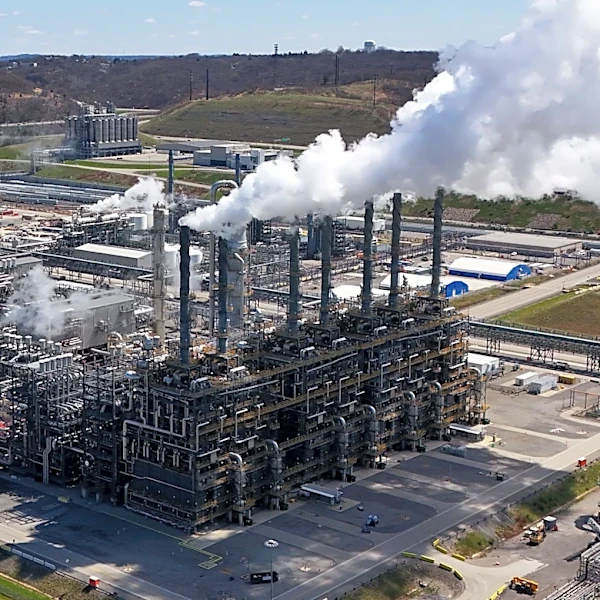
Thyssenkrupp Uhde, through its subsidiary Uhde Inventa-Fischer, has entered into a contract with Turkish packaging manufacturer Köksan to build a new PET production plant in Yumurtalık, Türkiye. The plant, which is expected to be completed and operational
by 2028, will have a production capacity of 324,000 tons of PET pellets annually. This facility will utilize Thyssenkrupp Uhde's patented Melt-To-Resin (MTR) process, which significantly reduces energy consumption and lowers both capital and operational expenditures. The plant aims to supply PET pellets for various packaging applications to markets in the Middle East, America, Europe, and Africa. The project underscores Thyssenkrupp Uhde's commitment to providing environmentally friendly and economically advantageous technologies.
Why It's Important?
The construction of this low-emission polyester plant is significant as it aligns with global efforts to reduce industrial carbon footprints. By employing the MTR process, the plant will achieve up to a 30% reduction in CO2 emissions related to fuel and electrical energy. This development not only supports environmental sustainability but also enhances the economic efficiency of PET production. The project is poised to strengthen Köksan's market position by expanding its production capabilities and meeting the growing demand for sustainable packaging solutions. Additionally, the plant's strategic location in Türkiye facilitates access to multiple international markets, potentially boosting regional economic growth.
What's Next?
As the project progresses towards its 2028 completion, Thyssenkrupp Uhde will focus on the detailed engineering and supply of major plant components. Training for Köksan's operating personnel will also be a priority to ensure smooth operations upon commissioning. The successful implementation of this project could set a precedent for future low-emission industrial facilities, encouraging other companies to adopt similar sustainable technologies. Stakeholders in the packaging and environmental sectors will likely monitor the plant's development closely, as it may influence industry standards and regulatory policies regarding emissions and energy consumption.