






What's Happening?
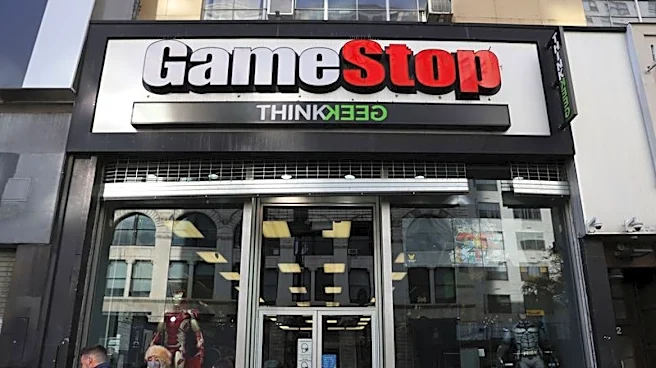
GameStop, led by CEO Ryan Cohen, has announced a bid to acquire eBay for $56 billion, offering $125 per share. This move has generated enthusiasm among retail investors, particularly those involved in the meme-stock movement, who view it as a strategic
step towards transforming GameStop into an investment holding company similar to Berkshire Hathaway. However, the announcement has also raised concerns about potential stock dilution, as GameStop may issue more shares to finance the acquisition. While some investors are optimistic about Cohen's vision, others worry about the impact on shareholder value.
Why It's Important?
The acquisition attempt highlights the ongoing influence of retail investors in the stock market, particularly those involved in meme stocks. GameStop's strategy reflects a broader trend of companies seeking to diversify and expand their business models. The potential acquisition of eBay could significantly alter GameStop's market position, providing it with a broader e-commerce platform. However, the move also poses risks, including financial strain from increased debt and potential dilution of existing shares, which could affect investor confidence and stock performance.
What's Next?
As GameStop pursues the acquisition, it will need to navigate regulatory approvals and potential shareholder pushback. The company's ability to successfully integrate eBay's operations will be crucial in determining the long-term success of the acquisition. Investors will closely monitor GameStop's financial strategies, particularly regarding stock issuance and debt management. The outcome of this acquisition could influence future corporate strategies within the retail and e-commerce sectors, potentially encouraging other companies to pursue similar expansion efforts.