

What's Happening?
BMW Group is set to test humanoid robots in its Leipzig plant in Germany, marking the first time these robots will be used in European production facilities. This initiative is part of BMW's strategy to integrate 'Physical AI'—a combination of digital
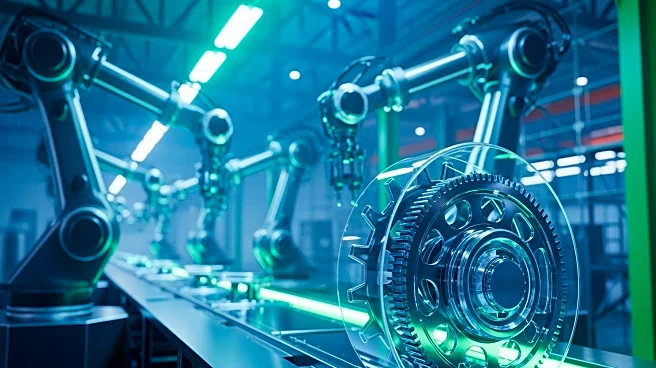
artificial intelligence and physical machines—into its manufacturing processes. The project follows a successful pilot in the United States, where humanoid robots were tested at BMW's Spartanburg plant. The robots will be evaluated for their ability to work alongside existing manufacturing systems, particularly in battery assembly and component manufacturing. BMW aims to enhance production competitiveness through digitalization and AI, with humanoid robots complementing existing automation technologies.
Why It's Important?
The introduction of humanoid robots into BMW's production facilities represents a significant advancement in manufacturing technology. By integrating AI and robotics, BMW aims to improve efficiency, reduce labor costs, and enhance safety in its production processes. This move could set a precedent for other manufacturers, potentially leading to widespread adoption of similar technologies across the industry. The ability of humanoid robots to perform monotonous or safety-critical tasks could transform factory operations, making them more flexible and future-proof. As BMW continues to develop its Physical AI strategy, it could gain a competitive advantage in the global automotive market.
What's Next?
BMW plans to conduct further testing of humanoid robots in its Leipzig plant, with a full pilot phase expected to start in the summer. The company is also expanding its internal capabilities to evaluate and deploy these technologies more systematically, establishing a new Center of Competence for Physical AI in Production. This center will consolidate expertise in robotics and AI across BMW's global manufacturing network. As BMW continues to explore the potential of humanoid robots, it may identify additional use cases and applications, further integrating these technologies into its production systems.