



What's Happening?
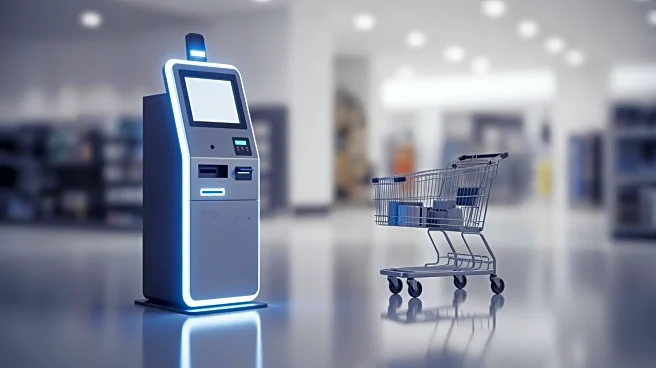
The debate over self-checkout lanes at Walmart and other retail stores continues to stir controversy. Critics argue that self-checkout systems eliminate jobs, while supporters claim they offer convenience and efficiency. The discussion highlights a perceived hypocrisy among consumers who complain about job losses yet prefer self-checkout to avoid long lines. Despite concerns, Walmart maintains that self-checkout is a business strategy to reduce costs and improve customer experience. The company asserts that while cashier roles may decrease, other positions such as greeters, stockers, and online order handlers remain available, reflecting a shift in employment rather than a reduction.
Why It's Important?
The expansion of self-checkout systems at major retailers like
Walmart has significant implications for the retail industry and employment patterns. As businesses seek to cut costs and enhance efficiency, the traditional cashier role is evolving, potentially affecting job availability and skill requirements. This shift may lead to broader economic impacts, including changes in consumer behavior and workforce dynamics. While self-checkout offers convenience, it raises questions about the future of retail employment and the balance between technological advancement and job preservation.
What's Next?
Walmart is likely to continue expanding self-checkout options, driven by consumer demand for faster service and cost-saving measures. This trend may prompt other retailers to adopt similar strategies, potentially accelerating the shift in retail employment. Stakeholders, including labor advocates and policymakers, may push for discussions on the implications of automation in retail and explore measures to support affected workers. The ongoing debate may also influence consumer perceptions and shopping habits, as convenience increasingly competes with concerns over job security.
Beyond the Headlines
The self-checkout debate touches on broader themes of automation and its impact on employment. As technology advances, industries must navigate the ethical and economic challenges of balancing efficiency with workforce sustainability. The retail sector's adaptation to self-checkout systems reflects a microcosm of the larger conversation about automation's role in society. This development may prompt discussions on retraining programs and policies to support workers transitioning to new roles in an evolving job market.