




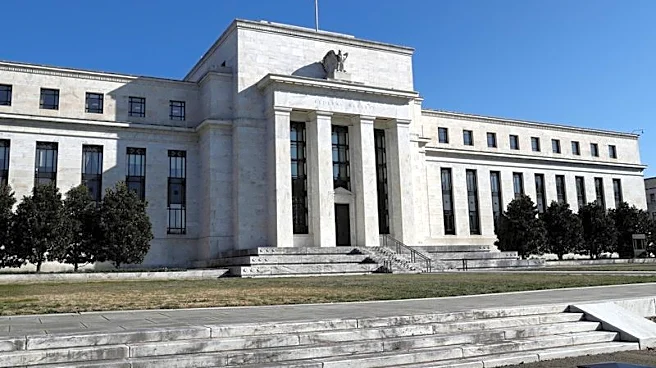


What's Happening?
The U.S. stock market reacted negatively to the May 2026 jobs report, which showed a stronger-than-expected addition of 172,000 jobs. Despite the positive economic signal, investors were concerned about the implications for Federal Reserve monetary policy.
The robust job growth, coupled with persistent inflation, reduced the likelihood of interest rate cuts, which investors had been anticipating to boost stock prices. As a result, major stock indexes, including the Nasdaq 100 and S&P 500, experienced significant declines. The 10-year U.S. Treasury yield rose above 4.5%, reflecting expectations of prolonged higher interest rates.
Why It's Important?
The strong jobs report underscores the resilience of the U.S. economy but complicates the Federal Reserve's policy decisions. Investors had hoped for rate cuts to support economic growth and asset prices, but the combination of a strong labor market and rising inflation suggests that such cuts are unlikely. This scenario poses challenges for stock market performance, particularly for growth sectors like technology, which are sensitive to interest rate changes. The market's reaction highlights the delicate balance the Fed must maintain between controlling inflation and supporting economic growth.
What's Next?
Market participants will closely watch upcoming economic data, including inflation reports, to gauge the Fed's next moves. The central bank's decisions on interest rates will significantly impact market dynamics, influencing investment strategies and economic forecasts. Businesses and investors may need to adjust their expectations and strategies in response to potential rate hikes or sustained high rates. The ongoing geopolitical tensions, such as the U.S.-Iran conflict, add another layer of uncertainty to the economic outlook.