








What's Happening?
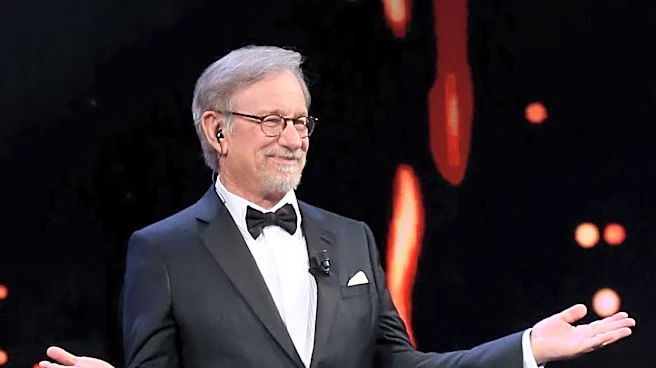
Steven Spielberg's latest film, 'Disclosure Day,' delves into contemporary issues through an alien allegory. The movie, written by David Koepp, follows a whistleblower named Daniel Kellner, played by Josh O'Connor, who is on the run after stealing evidence
of government concealment of extraterrestrial visits. Alongside him is Margaret Fairchild, portrayed by Emily Blunt, a meteorologist who develops mind-reading abilities and becomes entangled in the conspiracy. The film is set against a backdrop of geopolitical tensions and explores themes of truth, government secrecy, and societal unease. Spielberg uses the narrative to comment on the fragmented nature of modern life and the challenges of processing overwhelming information.
Why It's Important?
The film's significance lies in its reflection of current societal and political anxieties. By using an alien narrative, Spielberg addresses the pervasive distrust in government and the media, highlighting the challenges of discerning truth in a post-truth era. The movie's themes resonate with ongoing debates about transparency, privacy, and the role of whistleblowers. It also underscores the importance of empathy and understanding in navigating complex global issues. Spielberg's work encourages audiences to critically engage with the information they receive and consider the broader implications of government actions and secrecy.
What's Next?
As 'Disclosure Day' reaches audiences, it may spark discussions about the role of cinema in addressing real-world issues. The film could influence public discourse on government transparency and the ethical responsibilities of media and whistleblowers. Spielberg's optimistic message may inspire viewers to advocate for greater openness and accountability in governance. Additionally, the film's release could prompt further exploration of the intersection between entertainment and social commentary, encouraging filmmakers to tackle pressing contemporary issues through creative storytelling.
Beyond the Headlines
Beyond its immediate narrative, 'Disclosure Day' raises questions about the ethical implications of government secrecy and the potential consequences of revealing hidden truths. The film's portrayal of a society grappling with extraordinary revelations invites reflection on the balance between national security and public knowledge. It also highlights the psychological impact of living in a world where information is both abundant and controlled, challenging audiences to consider how they process and respond to complex realities. Spielberg's work serves as a reminder of the power of storytelling to illuminate and provoke thought on critical societal issues.