
What's Happening?
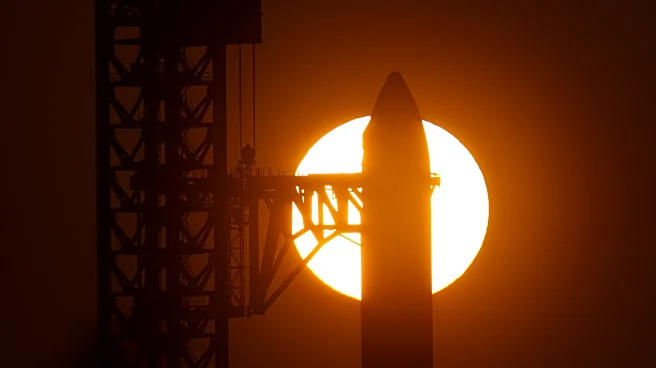
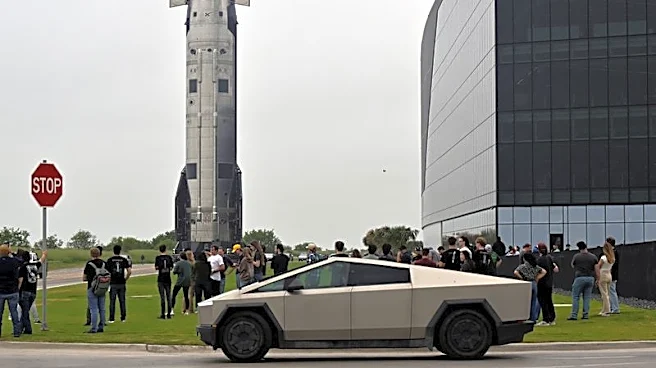
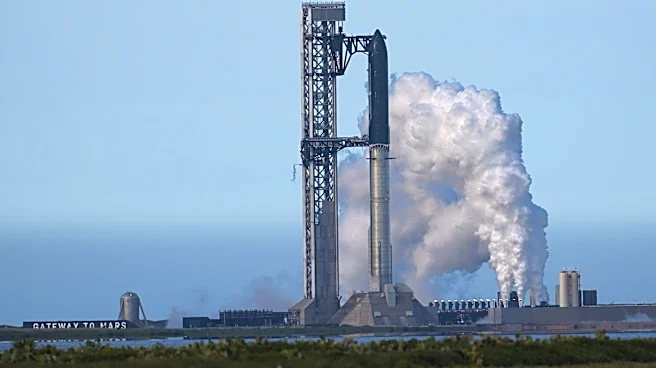
SpaceX successfully launched the first test flight of its upgraded Starship rocket and Super Heavy booster, known as Starship V3, from its Starbase launch facility in South Texas. The launch took place
at 5:30 pm CDT and saw the 408-foot-tall rocket, the largest ever built, clear the launch tower and head eastward over the Gulf of Mexico. The rocket, powered by 33 methane-fueled main engines, completed its mission by splashing down in the Indian Ocean. This flight marks a significant improvement over previous versions, as both Starship V1 and V2 experienced failures during their inaugural launches. SpaceX's CEO Elon Musk and other company leaders expressed satisfaction with the launch, highlighting it as a milestone for future space exploration.
Why It's Important?
The successful test flight of Starship V3 is a crucial step for SpaceX and its ambitions to revolutionize space travel. This development is particularly significant for NASA, which plans to use the Starship as a human-rated Moon lander. The progress demonstrated by this launch could accelerate timelines for future missions, including potential crewed missions to the Moon and Mars. The success of Starship V3 also reinforces SpaceX's position as a leader in the private space industry, potentially influencing future contracts and collaborations with government space agencies and private enterprises.
What's Next?
Following the successful test flight, SpaceX is likely to continue refining the Starship design and conduct further tests to ensure reliability and safety for future missions. NASA and other stakeholders will be closely monitoring these developments, as the Starship's performance is critical to upcoming lunar missions. Additionally, SpaceX's progress may prompt increased competition and innovation within the aerospace industry, as other companies strive to match or exceed SpaceX's capabilities.