
What's Happening?
Investors are experiencing heightened anxiety as the 'freak out' indicator, a measure of market volatility, reaches a new record due to the ongoing conflict in Iran. The daily turnover in the State Street
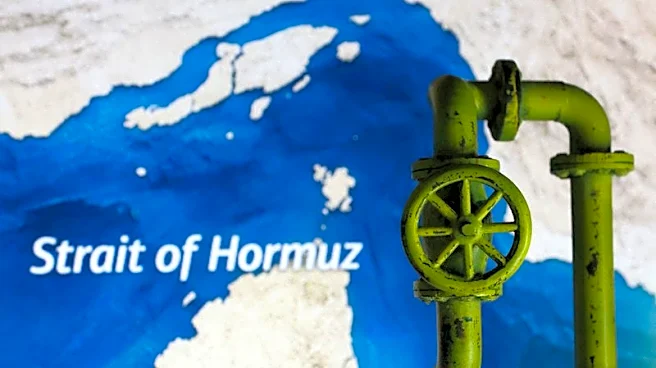
SPDR S&P 500 ETF Trust has surpassed $60 billion 29 times this year, indicating increased trading activity. This surpasses the previous record of 28 times in 2025. The volatility was evident when the S&P 500 Index initially dropped 1.2% following President Trump's pressure on Tehran to reopen the Strait of Hormuz, only to recover after a ceasefire agreement was reached. Despite the temporary relief, market observers remain cautious about the conflict's duration and its impact on market stability.
Why It's Important?
The record levels of trading activity reflect the market's sensitivity to geopolitical developments, particularly those involving the U.S. and Iran. The uncertainty surrounding the conflict has led to increased volatility, affecting investor confidence and market dynamics. The situation underscores the broader implications of geopolitical tensions on global markets, as traders react to every development. The ceasefire provides a short-term respite, but the potential for escalation remains, keeping investors on edge. The market's reaction highlights the interconnectedness of global events and their influence on U.S. financial markets, with potential repercussions for economic stability and investor strategies.
What's Next?
The ceasefire agreement between the U.S. and Iran offers temporary relief, but the market remains vigilant for any signs of renewed conflict. Investors will closely monitor developments in the Middle East, as well as any statements from President Trump and Iranian officials. The potential for further escalation or resolution will significantly impact market sentiment and trading strategies. Additionally, analysts will watch for any shifts in investor behavior, particularly among retail investors and hedge funds, as they navigate the ongoing uncertainty. The situation may also prompt discussions on risk management and the need for diversified investment strategies to mitigate geopolitical risks.