
What's Happening?
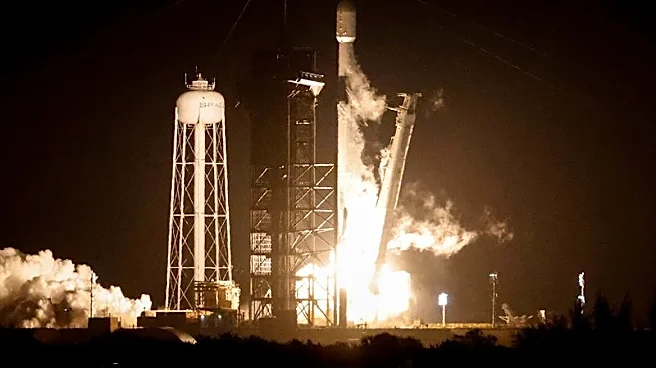
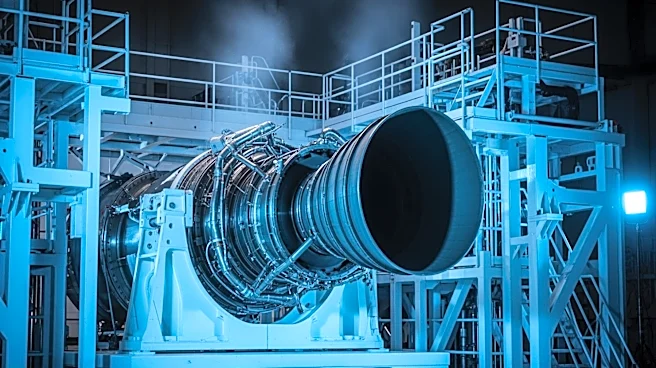
Blue Origin has conducted a static fire test of its New Glenn rocket at Cape Canaveral Space Force Station, marking a significant step towards the rocket's first reflight. The test involved firing the rocket's seven
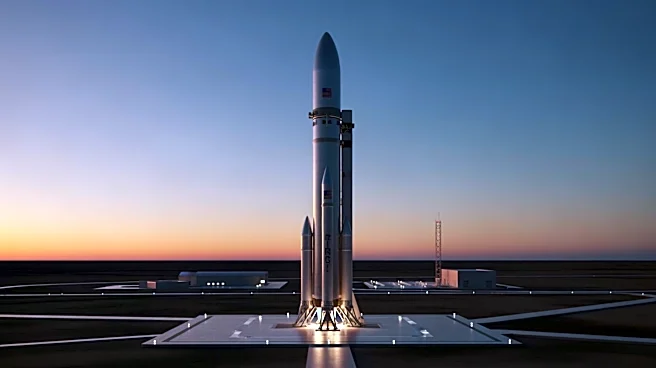
first-stage engines while it remained anchored to the pad. This milestone is part of preparations for the NG-3 mission, scheduled to launch on April 19, which will reuse a booster from a previous flight. The New Glenn rocket, which stands 322 feet tall, has launched twice before, including a mission that sent NASA's ESCAPADE probes to Mars. The upcoming mission will carry a Block 2 BlueBird satellite for AST SpaceMobile to low Earth orbit.
Why It's Important?
The successful reflight of the New Glenn rocket would mark a significant achievement for Blue Origin, placing it in direct competition with SpaceX in the reusable rocket market. Reusability is crucial for reducing the cost of space launches, and Blue Origin's ability to refly its rockets could enhance its competitiveness in the heavy-lift market. The NG-3 mission's success would demonstrate Blue Origin's capability to not only recover but also reuse its rockets, potentially attracting more commercial and government customers. This development could shift the dynamics in the space industry, where SpaceX has been a dominant player.
What's Next?
The NG-3 mission is set to launch on April 19, and its success could pave the way for more frequent reflights of the New Glenn rocket. Blue Origin aims for each New Glenn first stage to fly at least 25 times, which would significantly lower launch costs. The company plans to use the engines from the NG-2 flight on future missions, indicating a strategy to optimize and extend the life of its hardware. The outcome of this mission will be closely watched by industry stakeholders as it could influence future contracts and partnerships.