



What's Happening?
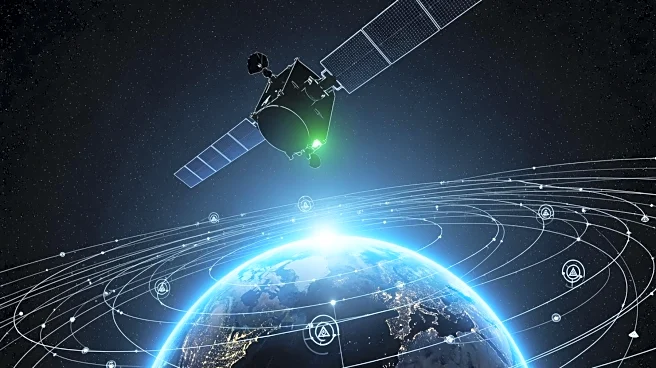
SpaceX's Starlink satellite constellation executed approximately 300,000 collision-avoidance maneuvers in 2025, as reported to the U.S. Federal Communications Commission (FCC). This figure marks a significant increase from the 200,000 maneuvers recorded in 2024. Starlink, which began launching satellites in 2019, now comprises about 9,400 satellites, representing 65% of all active satellites in orbit. The maneuvers are necessary to prevent potential collisions that could generate debris, threatening the usability of Earth's orbit. SpaceX's approach is more conservative than the industry standard, initiating maneuvers at a lower risk threshold. The report also highlighted repeated close encounters with other satellites, including over 1,000 with a Chinese
satellite, Honghu-2. Additionally, a Starlink satellite exploded in December due to a suspected hardware failure, releasing debris. SpaceX has since removed the faulty components from future designs.
Why It's Important?
The high number of maneuvers underscores the growing congestion in Earth's orbit, raising concerns about the sustainability of satellite operations. As more mega-constellations are deployed, the risk of collisions and space debris increases, potentially leading to a cascade effect that could render parts of orbit unusable. This situation poses significant challenges for space traffic management and highlights the need for international cooperation and regulation. The dominance of SpaceX in certain orbital altitudes also raises questions about equitable access to space, as outlined in the Outer Space Treaty. The incident with the Chinese satellite and the explosion of a Starlink satellite further emphasize the complexities and risks involved in managing such a large constellation.
What's Next?
SpaceX is expected to continue expanding its Starlink constellation, which could lead to even more collision-avoidance maneuvers in the future. The company aims to perform up to 1 million maneuvers annually by 2027. This expansion will likely prompt further discussions on space traffic management and the need for updated regulations to ensure the safety and sustainability of satellite operations. Other countries and companies deploying their own constellations will also need to coordinate to prevent collisions and manage space traffic effectively. The situation may lead to increased scrutiny from regulatory bodies and calls for more stringent safety measures.
Beyond the Headlines
The rapid increase in satellite maneuvers highlights the broader issue of space governance and the need for a comprehensive framework to manage the growing number of satellites. The potential for collisions and debris not only threatens satellite operations but also poses risks to future space exploration and the safety of astronauts. The situation calls for a reevaluation of current space treaties and the development of new international agreements to address the challenges of space traffic management. Additionally, the dominance of a few companies in certain orbital regions raises ethical questions about the commercialization of space and the need for equitable access to this shared resource.