
What's Happening?
U.S. futures experienced a decline early Friday following the release of unexpectedly strong jobs data from the federal government. Despite the closure of equity markets for Good Friday, futures markets continued
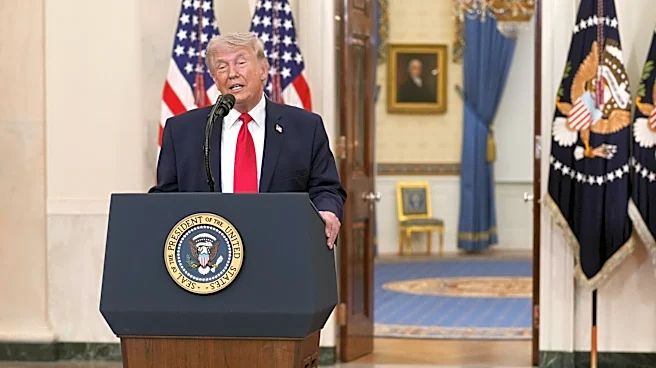
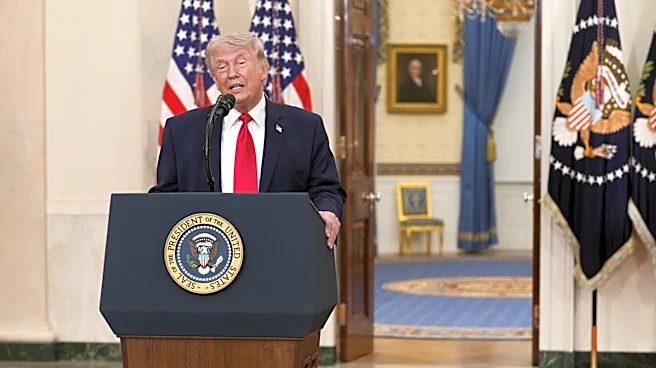
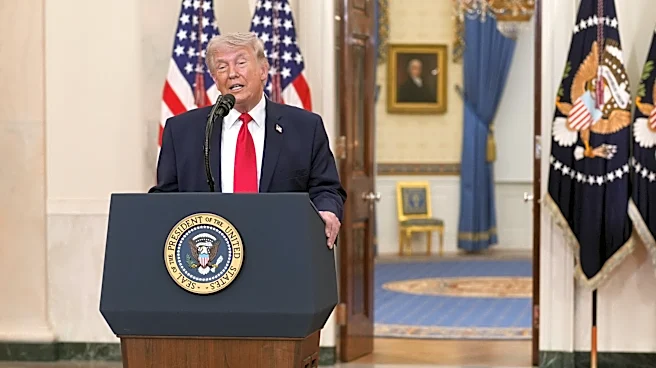
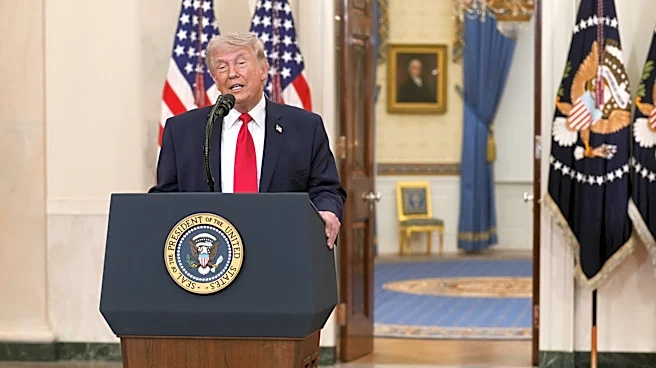
to trade, albeit quietly. The S&P 500 futures fell by 0.3%, Dow Jones futures decreased by 0.2%, and Nasdaq futures dropped by 0.4%. The jobs report revealed that American employers added 178,000 new jobs last month, a significant rebound from February's loss of 133,000 jobs, with the unemployment rate decreasing from 4.4% to 4.3%. Concurrently, energy markets remained closed after a surge in oil prices due to concerns over the prolonged conflict in Iran. U.S. benchmark crude rose by 11.4% to $111.54 per barrel, while Brent crude increased by 7.8% to $109.03 per barrel. President Trump announced continued U.S. military actions in Iran without specifying an end date, raising concerns about extended disruptions in the Strait of Hormuz.
Why It's Important?
The decline in U.S. futures following the strong jobs report highlights the complex interplay between domestic economic indicators and international geopolitical tensions. The robust job growth suggests a recovering labor market, which could influence Federal Reserve policy decisions regarding interest rates. However, the ongoing conflict in Iran poses risks to global oil supply chains, particularly through the Strait of Hormuz, a critical passage for oil transportation. This situation could lead to increased volatility in energy prices, affecting both consumer costs and corporate profit margins. The U.S. economy, while less reliant on Persian Gulf oil, is still susceptible to global market fluctuations. The geopolitical uncertainty may also impact investor sentiment, potentially leading to cautious trading behavior in the coming weeks.
What's Next?
As the situation in Iran unfolds, stakeholders will closely monitor developments for potential impacts on global oil markets and U.S. economic policy. The Federal Reserve may consider the implications of the strong jobs report in its upcoming meetings, potentially adjusting interest rates to manage inflationary pressures. Meanwhile, international negotiations regarding the Strait of Hormuz could influence future oil price stability. Analysts will watch for any diplomatic efforts to resolve the conflict, which could alleviate market concerns. Additionally, businesses and investors will assess the broader economic landscape, balancing domestic growth prospects against international uncertainties.