




What's Happening?
Anthropic, the company behind the Claude AI model, has released a study identifying jobs most at risk from AI displacement. The study reveals that computer programmers, customer service representatives, and data entry workers face the highest risk, with
AI capable of performing a significant portion of their tasks. Despite these findings, there has not been a notable increase in unemployment among these workers. However, hiring for AI-exposed roles among young workers aged 22 to 25 has decreased by approximately 14% since the launch of ChatGPT. The study emphasizes that AI is targeting knowledge-based roles, which are typically well-paid and require higher education, rather than low-skill jobs.
Why It's Important?
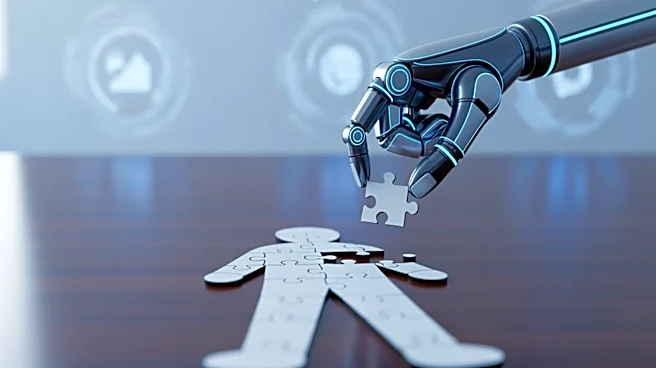
The study's findings underscore a shift in the impact of automation, with AI now affecting high-skill, knowledge-based jobs rather than traditional blue-collar roles. This shift could have significant implications for the U.S. labor market, particularly for young professionals entering the workforce. As AI continues to evolve, it may lead to a restructuring of job markets, affecting career paths and educational priorities. The decrease in hiring for AI-exposed roles among young workers suggests a potential long-term impact on employment trends and economic stability, as these roles are crucial for innovation and economic growth.
What's Next?
As AI technology continues to advance, companies and policymakers may need to address the potential displacement of high-skill jobs. This could involve re-evaluating educational programs to better prepare the workforce for AI integration and developing policies to support workers transitioning to new roles. Additionally, businesses may need to consider how to balance AI implementation with human employment to maintain economic stability and growth. The ongoing development of AI tools and their integration into various industries will likely continue to shape the future of work.