







What's Happening?
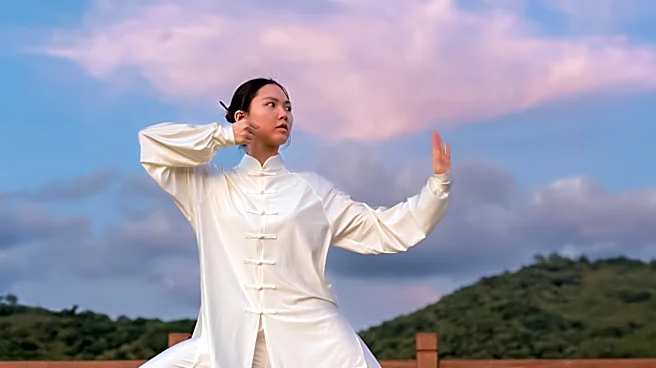
A recent large-scale randomized clinical trial has demonstrated that the ancient Chinese exercise practice known as baduanjin can significantly lower blood pressure, offering results comparable to brisk walking. Published in the Journal of the American
College of Cardiology (JACC), the study involved 216 adults with stage 1 hypertension, who were divided into three groups: those practicing baduanjin, those engaging in self-directed exercise, and those walking briskly. Over a year, participants practicing baduanjin five days a week experienced a reduction in 24-hour systolic blood pressure by about 3 mm Hg and office systolic blood pressure by 5 mm Hg. These results were maintained over the course of the year, highlighting the exercise's potential as a sustainable lifestyle intervention.
Why It's Important?
The findings of this study are significant as they offer a low-cost, accessible alternative to medication for managing high blood pressure, a major risk factor for heart disease. Baduanjin, which involves slow movements, controlled breathing, and meditation, can be practiced without special equipment or facilities, making it an attractive option for individuals who may struggle with traditional exercise routines. The study's results suggest that baduanjin could be implemented widely as a community-based intervention, particularly in resource-limited settings, providing a scalable solution to a global health issue. This could lead to reduced healthcare costs and improved quality of life for individuals with hypertension.
What's Next?
The success of this study may encourage further research into the benefits of traditional exercises like baduanjin, potentially leading to their integration into public health strategies. Healthcare providers might begin recommending such practices as part of a comprehensive approach to managing hypertension. Additionally, community programs could be developed to teach and promote baduanjin, increasing its accessibility and adoption. As awareness grows, there may be increased interest in exploring other traditional practices for their health benefits, potentially broadening the scope of non-pharmacological interventions available to the public.
Beyond the Headlines
The validation of baduanjin through rigorous scientific research highlights the potential of integrating traditional practices into modern healthcare. This approach not only respects cultural heritage but also provides a holistic view of health management. The study underscores the importance of considering lifestyle and cultural factors in health interventions, which can lead to more personalized and effective healthcare solutions. As the healthcare industry continues to evolve, such integrative approaches may become more prevalent, offering diverse options for disease prevention and management.