
What's Happening?
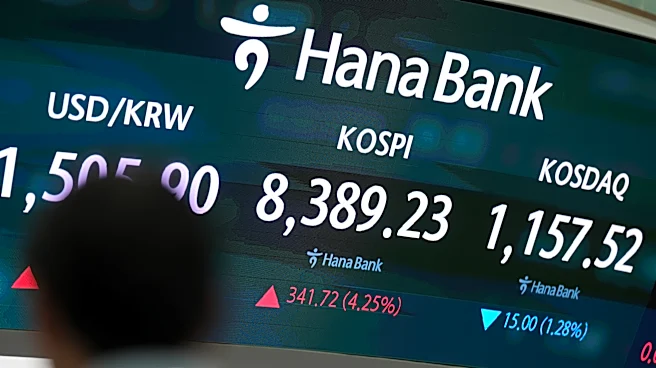
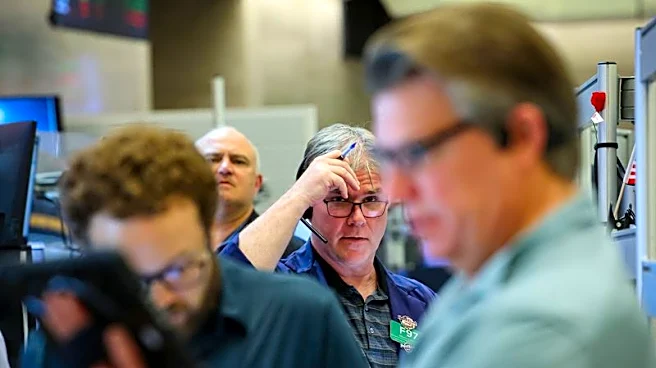
Wall Street continued its upward trajectory, with major stock indexes reaching new record highs. The S&P 500 rose by 0.2%, marking its seventh consecutive gain and ninth straight winning week, the longest
streak since 2023. The Dow Jones Industrial Average increased by 0.7%, and the Nasdaq composite added 0.2%. This surge was largely driven by technology stocks, which have been pivotal in the market's recent record-breaking performance. Notably, Dell Technologies led the charge with a 32.8% increase in its stock price after reporting profits that exceeded expectations and raising its outlook due to strong demand for AI computing. Despite these gains, other sectors in the S&P 500 saw declines, with companies like Amazon and Costco experiencing drops. The market's performance comes amid concerns over inflation and the ongoing U.S. conflict with Iran, which has impacted oil prices and economic growth.
Why It's Important?
The continued rise in stock market indices highlights the significant influence of technology companies on the broader market. The strong performance of tech stocks, particularly those involved in AI, underscores the growing importance of artificial intelligence in driving corporate profits and investor confidence. However, the market's gains are tempered by concerns over inflation, exacerbated by high oil prices due to geopolitical tensions. This situation presents a complex economic landscape where rising corporate profits are juxtaposed with consumer and business pressures from inflation. The Federal Reserve's response to inflation, particularly its interest rate decisions, will be crucial in shaping future economic conditions. Investors and policymakers alike are closely monitoring these dynamics, as they have far-reaching implications for economic stability and growth.
What's Next?
Looking ahead, the Federal Reserve's upcoming meetings will be critical as it navigates the challenges of rising inflation and economic growth. The Fed is expected to maintain its current interest rate policy, but any changes could significantly impact borrowing costs and economic activity. Additionally, the resolution of the U.S.-Iran conflict and its effect on oil prices will be pivotal in determining inflationary pressures. Investors will also be watching for further corporate earnings reports, which could shift focus back to consumer behavior and economic fundamentals. The interplay between these factors will shape market trends and economic policy decisions in the coming months.