



What's Happening?
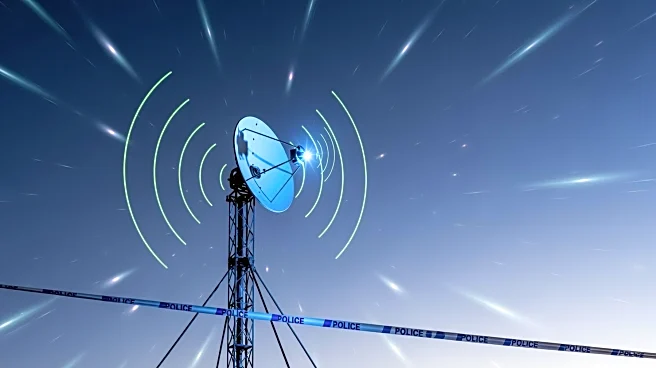
EDGE Microwave is addressing the growing issue of GNSS interference, which poses significant risks to industries reliant on satellite navigation, such as aviation and autonomous vehicles. The company highlights the increasing vulnerability of GNSS signals due to low-cost jammers and spoofing tools. In their latest exploration, EDGE Microwave identifies both unintentional and intentional interference sources and their impacts on sectors like maritime, UAVs, and telecommunications. The company emphasizes the importance of Controlled Reception Pattern Antennas (CRPAs) as a robust mitigation strategy, capable of suppressing interference from multiple sources. Additional techniques such as adaptive filtering, Kalman-based tracking, and GNSS/INS fusion
are also discussed to ensure secure navigation. As interference events become more complex and frequent, EDGE Microwave underscores the critical role of advanced anti-jamming solutions in maintaining reliable Positioning, Navigation, and Timing (PNT) systems.
Why It's Important?
The development of advanced GNSS interference mitigation techniques is crucial for maintaining the integrity and reliability of navigation systems across various industries. As GNSS signals are integral to the functioning of sectors like aviation, maritime, and telecommunications, any disruption can lead to significant operational challenges and safety risks. By implementing solutions like CRPAs and other advanced technologies, industries can protect their navigation systems from interference, ensuring continuous and accurate positioning and timing. This is particularly important as the reliance on satellite navigation continues to grow with the expansion of autonomous vehicles and UAVs. The advancements by EDGE Microwave not only enhance security but also support the broader technological infrastructure that underpins modern transportation and communication networks.