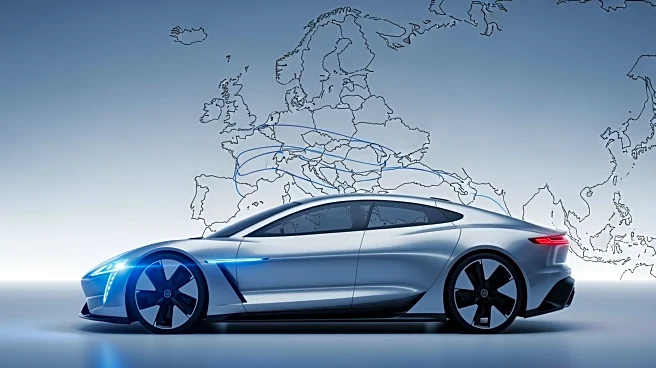




What's Happening?
The European Union has granted Volkswagen Anhui an exemption from tariffs for its China-made electric vehicle, the Cupra Tavascan SUV. This decision spares the vehicle from a 20.7% countervailing duty under the EU's new price undertaking framework. The exemption is part of a mechanism that allows automakers to avoid tariffs by committing to minimum pricing and making significant investments in the EU. Volkswagen's proposal included commitments to an import quota and battery EV-related investments. This marks the first approval under the new framework, which aims to ease trade tensions while protecting European automakers from lower-cost Chinese imports.
Why It's Important?
The exemption for Volkswagen's Cupra Tavascan highlights the EU's strategic approach to balancing
trade relations with China while supporting its domestic automotive industry. By allowing tariff exemptions in exchange for investment commitments, the EU seeks to encourage foreign automakers to contribute to the European economy. This move could set a precedent for other automakers seeking similar exemptions, potentially influencing trade dynamics and investment patterns in the automotive sector. The decision also underscores the EU's efforts to maintain competitiveness in the face of increasing Chinese EV imports.
What's Next?
Following Volkswagen's successful exemption, other Chinese EV manufacturers may pursue similar agreements to gain access to the European market. The EU's framework could lead to increased foreign investment in the European automotive industry, potentially boosting local economies and job creation. However, the framework also requires careful monitoring to ensure compliance with pricing and investment commitments. The outcome of this policy could influence future trade negotiations and the EU's approach to managing international trade relations.