






What's Happening?
AIR One, an electric vertical take-off and landing (eVTOL) aircraft developed by the Israeli company AIR, is positioning itself to be the first eVTOL certified as a light sport aircraft (LSA) under the Federal Aviation Administration's (FAA) amended Modernization
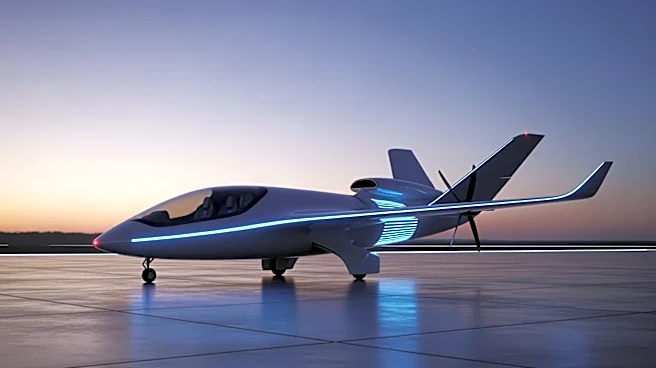
of Special Airworthiness Certification (MOSAIC) rules. The AIR One prototype, characterized by its unique design with thin wings and twin tail, is smaller than many of its urban air mobility (UAM) counterparts, featuring just two seats and a maximum take-off weight of 1,220 kg. The aircraft has already received its FAA experimental airworthiness certificate, and AIR plans to deliver its first customer aircraft by early 2027. The AIR One's design includes a 7.5-meter wingspan that folds for storage, enhancing battery efficiency and allowing it to fit in a standard garage. The company has partnered with Dynon for its avionics, integrating the SkyView HDX flight deck into the aircraft.
Why It's Important?
The development of the AIR One as a light sport aircraft under the FAA's revised regulations represents a significant step in the evolution of urban air mobility. By targeting recreational pilots, AIR is expanding the market for eVTOLs beyond commercial air taxi services, potentially increasing accessibility and interest in personal aviation. The AIR One's simplified design and operational ease could attract a new demographic of pilots who are deterred by the complexity and cost of traditional aircraft. This move could stimulate growth in the eVTOL sector, encouraging innovation and competition among manufacturers. Additionally, the AIR One's potential applications in cargo transport, agriculture, and military markets highlight its versatility and the broader impact it could have on various industries.
What's Next?
AIR plans to showcase the AIR One at the EAA AirVenture show in Oshkosh, aiming to attract more interest and pre-orders. The company is also exploring the development of an uncrewed cargo version, which could open new market opportunities. As production ramps up, AIR anticipates achieving economies of scale that will lower the unit price, making the AIR One more competitive with other light sport aircraft. The success of the AIR One could influence regulatory approaches to eVTOL certification and encourage other manufacturers to pursue similar paths, potentially accelerating the integration of eVTOLs into mainstream aviation.
Beyond the Headlines
The AIR One's development under the MOSAIC rules could set a precedent for future eVTOL certifications, influencing how these aircraft are perceived and utilized. The focus on recreational use and ease of operation may shift public perception of eVTOLs from niche technology to practical personal transport solutions. This shift could have cultural implications, changing how people view air travel and personal mobility. Additionally, the AIR One's design innovations, such as its folding wings and efficient battery use, could inspire further advancements in eVTOL technology, promoting sustainability and efficiency in aviation.