




What's Happening?
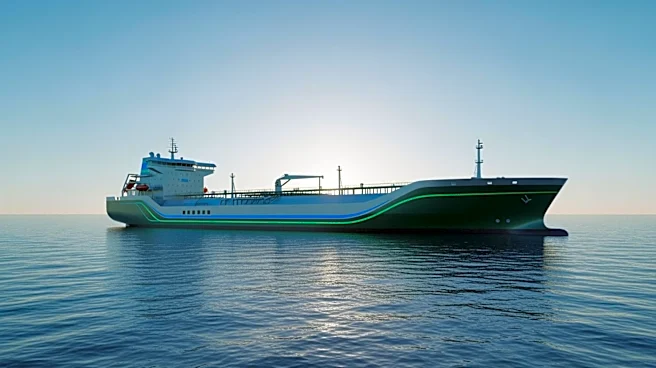
Braskem, a leading polyolefins producer in the Americas, has announced the naming of two new tankers, Beautiful Future and Blooming Future, as part of its fleet modernization and sustainability efforts. These next-generation chemical and product oil tankers are
designed to transport essential raw materials more efficiently and with a significantly reduced environmental footprint. The vessels, which were named at a ceremony in China, will operate on long-distance routes between the U.S. Gulf Coast and Brazil. They incorporate advanced engine technology, energy-saving hull designs, and emissions-control systems that exceed current regulatory requirements. The new tankers are expected to emit approximately 30% less CO2 than the average vessels currently in operation at Braskem, representing a significant step forward in reducing the environmental impact of maritime operations.
Why It's Important?
The introduction of these advanced tankers by Braskem highlights a significant shift towards more sustainable practices in the global shipping industry. By reducing CO2 emissions by 30%, these vessels contribute to the broader efforts to combat climate change and reduce the carbon footprint of international trade. This move aligns with increasing regulatory pressures and consumer demand for environmentally responsible business practices. The reduction in emissions is equivalent to eliminating nearly 50,000 one-way flights between Amsterdam and Paris, underscoring the potential impact of such innovations on global environmental goals. As industries worldwide face mounting pressure to adopt sustainable practices, Braskem's initiative sets a precedent for other companies in the maritime and petrochemical sectors.
What's Next?
Braskem plans to expand its fleet further, with two additional ships under construction and scheduled for delivery later this year and early 2027. This expansion is part of Braskem's ongoing commitment to sustainability and innovation in the maritime industry. The company aims to continue reducing its environmental impact while meeting the growing demand for raw materials used in everyday products. As these new vessels become operational, they are expected to influence industry standards and encourage other companies to adopt similar technologies and practices. Stakeholders, including environmental groups and regulatory bodies, will likely monitor the performance and impact of these vessels closely.