




What's Happening?
The U.S. farm equipment industry is experiencing a mixed outlook as it grapples with a forecasted decline in farm income while simultaneously benefiting from increased demand for agricultural machinery. According to the U.S. Department of Agriculture,
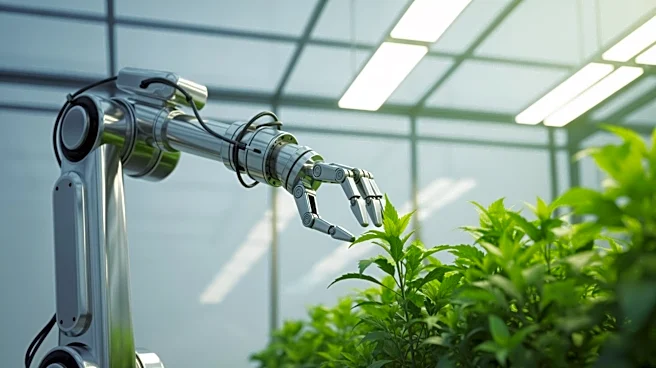
net farm income is expected to decrease by 0.7% to $153.4 billion in 2026, with inflation-adjusted figures showing a 2.6% decline. Despite this, companies like Deere & Company, CNH Industrial, AGCO Corporation, and Alamo Group are poised to capitalize on the growing need for precision agriculture and smart farming technologies. These advancements are driven by the global demand for food, which is increasing due to population growth and improved living standards. The industry is also seeing a rise in government farm payments, projected to increase by $13.8 billion from 2025, primarily due to higher commodity-related payments.
Why It's Important?
The developments in the farm equipment industry are significant as they highlight the dual pressures of economic challenges and technological advancements. The decline in farm income could impact farmers' purchasing power, potentially delaying investments in new equipment. However, the push towards precision agriculture and automation offers a pathway for the industry to innovate and meet the rising global food demand. This shift not only supports the agricultural sector but also has broader implications for food security and sustainability. Companies investing in smart farming solutions are likely to gain a competitive edge, driving efficiency and productivity in farming operations.
What's Next?
Looking ahead, the farm equipment industry is expected to continue its focus on technological innovation to address the challenges of declining farm income and rising production costs. Companies are likely to enhance their product offerings with advanced technologies to meet the evolving needs of farmers. Additionally, government policies and subsidies will play a crucial role in supporting the industry's growth. Stakeholders, including policymakers and industry leaders, will need to collaborate to ensure that the benefits of precision agriculture are accessible to farmers of all scales, thereby fostering a more resilient agricultural sector.