


What's Happening?
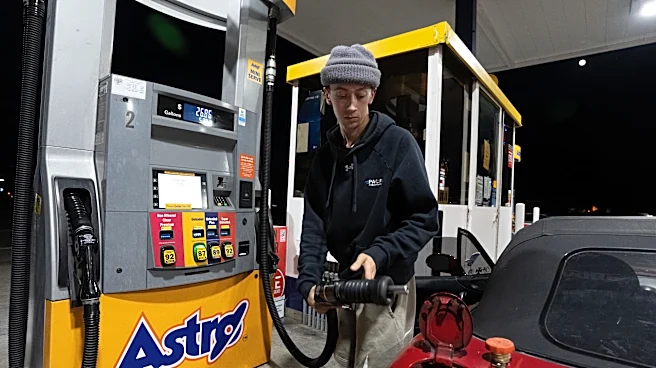
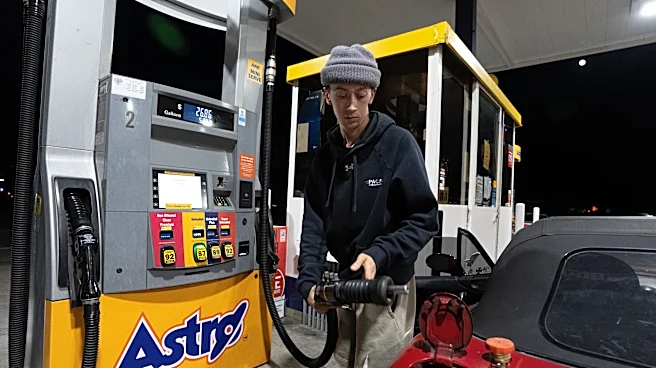
In March 2026, a significant increase in gasoline prices was observed, attributed to the closure of the Strait of Hormuz amid Middle Eastern conflicts. This price surge has led to a K-shaped pattern in gasoline consumption across different income groups
in the U.S. High-income households have increased their nominal spending on gasoline while maintaining their real consumption levels. In contrast, low-income households have reduced their real gasoline consumption despite facing higher nominal spending due to the price hike. This pattern mirrors the consumption trends seen during the Russia-Ukraine war in 2022, although the current disparities are more pronounced.
Why It's Important?
The K-shaped consumption pattern highlights the economic disparities among U.S. households, with high-income groups better able to absorb price shocks. This situation underscores the vulnerability of low-income households to energy price fluctuations, potentially affecting their mobility and access to essential services. The broader economic implications include potential shifts in consumer behavior, increased demand for public transportation, and heightened discussions on energy policy and economic inequality. Policymakers may need to consider targeted interventions to support low-income households in managing energy costs.
What's Next?
Future developments may include continued monitoring of gasoline consumption patterns and potential policy responses to address economic disparities. The ongoing geopolitical tensions in the Middle East could further influence energy prices, prompting additional analysis of consumer spending behaviors. Policymakers and economists will likely focus on strategies to mitigate the impact of energy price volatility on vulnerable populations.