






What's Happening?
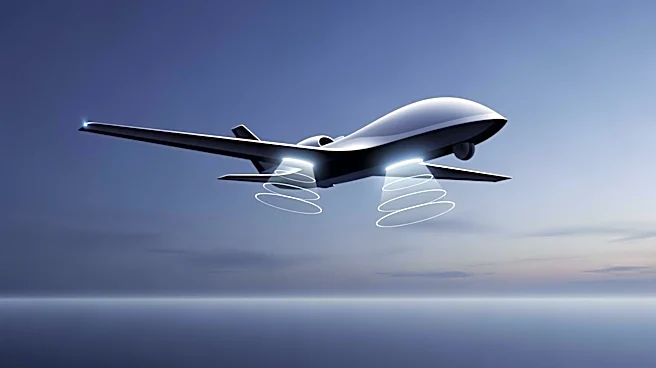
General Atomics Aeronautical Systems, Inc. (GA-ASI) has successfully completed the first validation flight of its MQ-9B Remotely Piloted Aircraft (RPA) equipped with Airborne Early Warning (AEW) radar pods. This development is part of a collaboration
with Saab, aimed at providing persistent and cost-effective air surveillance capabilities. The flight took place on May 19 at GA-ASI’s Desert Horizon flight operations facility in Southern California. The AEW sensor, named LoyalEye, is expected to enhance the MQ-9B's capabilities, offering critical aloft sensing to defend against various aerial threats. The partnership between GA-ASI and Saab was announced last year, with the goal of integrating AEW capabilities into the MQ-9B platform, which includes models like SkyGuardian and SeaGuardian.
Why It's Important?
The integration of AEW radar into the MQ-9B platform represents a significant advancement in unmanned aerial surveillance technology. This capability is crucial for enhancing situational awareness and mission success, particularly in regions lacking persistent air surveillance. The development is expected to provide military and civil operators with vital information for critical decision-making, thereby improving operational flexibility and safety. The unmanned nature of the MQ-9B also ensures that aircrews are not exposed to direct threats, making it a safer option for surveillance missions. This advancement could potentially influence defense strategies and procurement decisions, as nations seek to bolster their aerial surveillance capabilities.
What's Next?
The development process for the AEW-equipped MQ-9B is expected to continue over the coming months, culminating in a full-capability demonstration later this year. As the project progresses, it is likely that more military and civil operators will express interest in acquiring this enhanced surveillance capability. The successful integration of AEW radar could lead to further collaborations between GA-ASI and other defense contractors, potentially expanding the range of applications for the MQ-9B platform. Additionally, the demonstration of this technology may prompt other countries to invest in similar capabilities, influencing global defense markets.