


What's Happening?
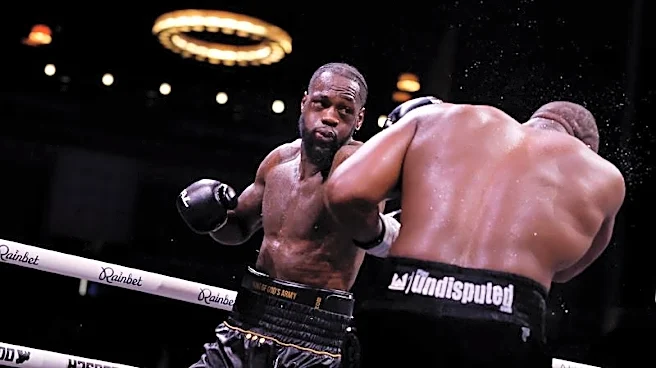
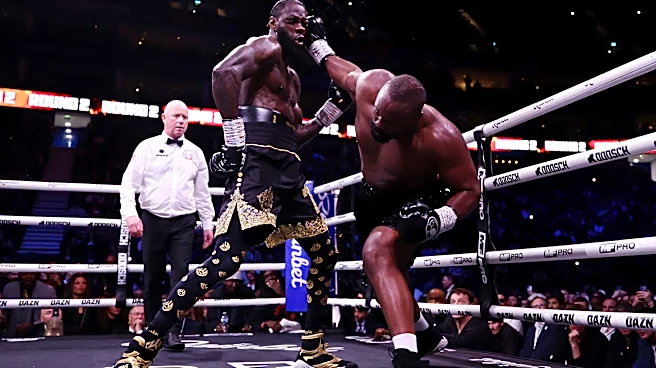
Deontay Wilder, the former heavyweight world champion, has announced that he will not retire from boxing following his recent victory over Derek Chisora. The fight, which took place in London, ended with Wilder winning by split decision after knocking
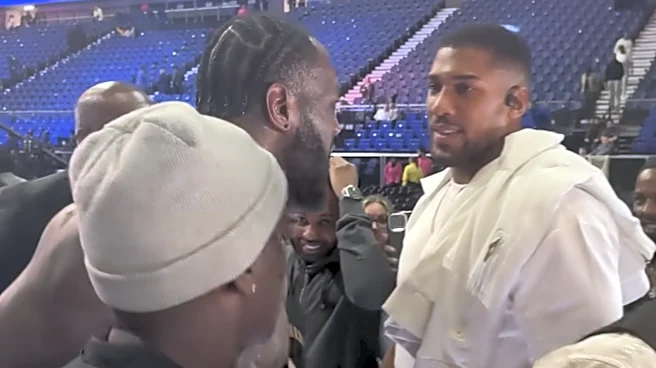
Chisora down multiple times. Despite both fighters showing signs of wear from their long careers, Wilder managed to secure the win. Chisora had previously stated that this would be his final fight, but Wilder has chosen to continue his career, aiming for another shot at world honors. Potential future opponents for Wilder include Oleksandr Usyk and Anthony Joshua, with the latter present at the fight.
Why It's Important?
Wilder's decision to continue fighting has significant implications for the heavyweight boxing scene. As a former world champion, his presence in the ring adds excitement and draws attention to the sport. His potential matchups with top contenders like Usyk and Joshua could generate substantial interest and revenue, impacting the boxing industry positively. For fans, Wilder's continued career offers the prospect of high-stakes bouts and the possibility of him reclaiming a world title. His decision also highlights the challenges athletes face when considering retirement, balancing personal goals with physical demands.
What's Next?
Wilder's next steps will likely involve negotiations for future fights, with a focus on securing a bout against a top contender. The boxing community will be watching closely to see if a match with Anthony Joshua materializes, given their history and the potential for a high-profile showdown. Wilder's team will need to strategize carefully to position him for another title run, considering his age and the competition in the heavyweight division. Fans and analysts will be eager to see how Wilder performs in his upcoming fights and whether he can achieve his goal of regaining a world championship.