






What's Happening?
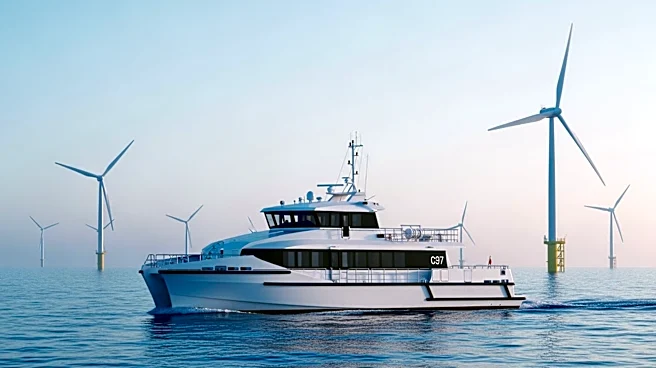
Inch Cape has expanded its offshore wind farm operations by acquiring two new-build crew transfer vessels (CTVs) from UK marine contractor Mainprize Offshore Ltd. The vessels, named MO12 and MO14, will be based at the Port of Montrose and are tasked with
transporting engineers and technicians to the offshore wind farm site during its construction phase. These vessels will continue to serve in the operations and maintenance phase under a five-year charter. Each vessel, designed by UK naval architects, can carry up to 24 passengers and is equipped with a bollard push of 21 tonnes, enabling safe personnel transfer in wave heights up to two meters. The vessels feature a multi-fuel capability and an optimized catamaran hull design, which enhances operational performance and reduces fuel consumption, thereby lowering emissions. They were constructed by Strategic Marine Group in Singapore.
Why It's Important?
The introduction of these advanced CTVs is significant for the offshore wind industry as it enhances the efficiency and safety of personnel transport to wind farm sites. This development is crucial for maintaining the momentum of renewable energy projects, which are pivotal in the global transition to sustainable energy sources. The vessels' ability to operate in challenging sea conditions increases the availability of transport services, potentially reducing project delays and costs. Furthermore, the environmental benefits of reduced emissions align with global efforts to minimize the carbon footprint of industrial operations, supporting broader climate change mitigation goals.
What's Next?
As the vessels begin operations, they are expected to improve the logistical efficiency of the Inch Cape offshore wind farm project. This could set a precedent for other offshore projects to adopt similar technologies, potentially leading to industry-wide improvements in operational efficiency and environmental performance. Stakeholders in the renewable energy sector may closely monitor the performance of these vessels to assess their impact on project timelines and environmental outcomes.