
What's Happening?
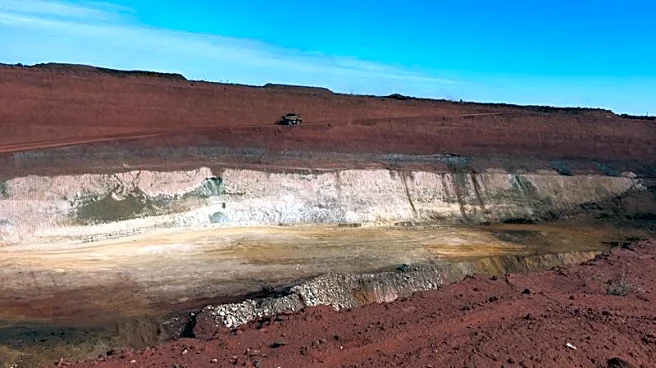
South America is becoming a pivotal player in the global copper market with the development of a 'copper corridor' involving Chile, Peru, and Argentina. These countries collectively hold vast Andean copper reserves,
attracting significant investment from major mining companies. The demand for copper is expected to outpace supply by 10 million metric tons by 2040, driven by the rise of electrification and new technologies. Currently, South America contributes around 41% of the world's copper output. Chile, Peru, and Argentina each bring unique strengths to the corridor, with Chile leading in infrastructure, Peru offering high-grade deposits, and Argentina providing untapped geological potential. Together, they aim to increase their combined output to 11-14 million tonnes by 2035, potentially capturing 35-40% of the global market share.
Why It's Important?
The emergence of South America's copper corridor is crucial as global supply chains increasingly rely on copper for renewable energy and electric vehicles, which use significantly more copper than traditional vehicles. The International Energy Agency predicts that copper demand in renewable energy will nearly double by 2030. This makes the copper corridor a strategic asset in meeting future global demand. The corridor's development also highlights the need for further exploration in underdeveloped geologies to meet the anticipated demand, as current known reserves are insufficient. The corridor's success could position South America as a structural anchor in the global copper economy for decades.
What's Next?
The three countries are expected to continue attracting investment and expanding their mining operations. Argentina, in particular, is poised for significant growth, with projections to produce 1,641,000 tonnes of copper annually within a decade. This expansion is supported by Argentina's Large Investment Incentive Regime, which offers tax benefits and other incentives to attract foreign investment. As the corridor develops, it will be crucial for these countries to manage operational challenges, such as declining ore grades in Chile and logistical issues in Peru, to maintain their competitive edge in the global market.