







What's Happening?
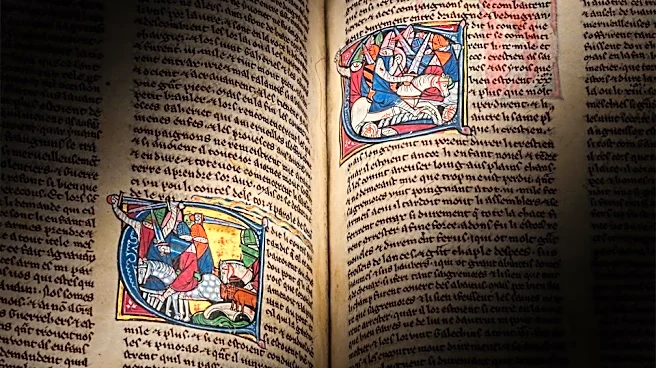
A rare medieval manuscript, known as the Clermont-Tonnerre Grail, is set to be auctioned by Christie's in July. This 700-year-old illuminated manuscript, featuring tales of King Arthur and Merlin, is expected to fetch up to $2.7 million. The manuscript, dating
from the 13th or 14th century, contains Old French text from the Lancelot-Grail cycle and includes 126 gold-leaf illustrations. It has been privately held for centuries and has never been publicly exhibited. The auction house has detailed its provenance, noting previous owners such as a 15th-century knight and a 20th-century industrialist. The manuscript is considered one of the earliest documents narrating the legend of King Arthur and the search for the Holy Grail.
Why It's Important?
The sale of the Clermont-Tonnerre Grail highlights the enduring cultural and historical significance of medieval literature. As one of the earliest documents of the King Arthur legend, it offers invaluable insights into medieval storytelling and art. The auction is likely to attract interest from both institutions and private collectors, given its rarity and historical value. This event underscores the ongoing fascination with Arthurian legends, which continue to influence literature, film, and academic study. The manuscript's sale could also set a precedent for the valuation of similar historical artifacts, impacting the market for rare books and manuscripts.
What's Next?
The auction, scheduled for July at Christie's in London, is expected to draw significant attention from collectors and institutions worldwide. Potential bidders may include museums and private collectors interested in acquiring a piece of medieval history. The outcome of the auction could influence future sales of similar artifacts, potentially increasing interest and investment in medieval manuscripts. Additionally, the sale may prompt further scholarly research into the manuscript's content and historical context, contributing to a deeper understanding of medieval literature and culture.