
What's Happening?
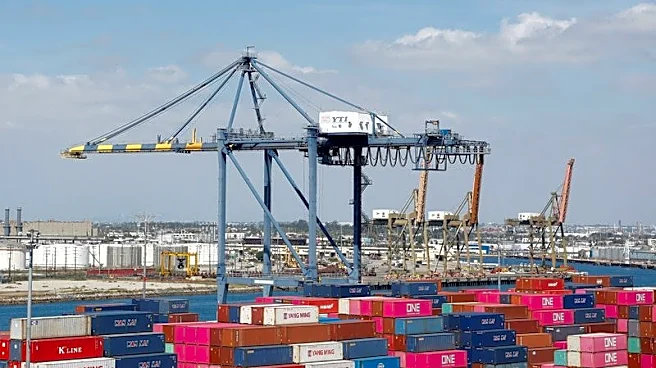
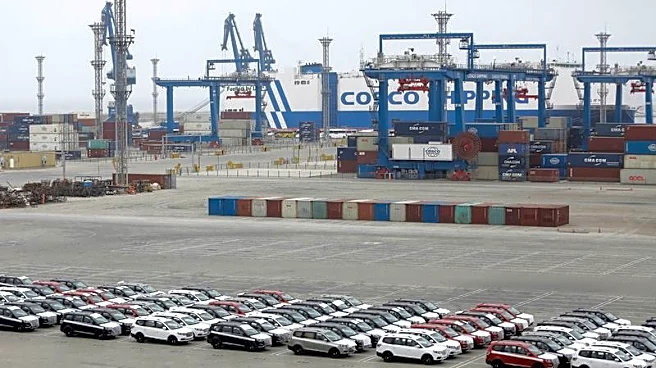
A recent report by consulting firm AT Kearney reveals that tariffs imposed by President Trump have not resulted in the anticipated resurgence of US manufacturing. Despite the tariffs, the US saw a 4.6%
increase in imports of manufactured goods, totaling $2.98 trillion in 2025. The report highlights that while imports from China decreased by one-third, production lines have shifted to other countries like Thailand, Cambodia, Indonesia, and Vietnam, which face lower tariffs. This shift has not led to significant reshoring of manufacturing to the US, challenging the initial rationale behind the tariffs. Additionally, the Tax Foundation found that the tariffs have generated less tax revenue than expected, with many companies seeking refunds on imports.
Why It's Important?
The findings underscore the complexities of global trade and the challenges of reshoring manufacturing to the US. The continued reliance on imports, despite tariffs, suggests that the intended economic benefits of the tariffs have not materialized. This situation affects various stakeholders, including US manufacturers who face competitive pressures from cheaper imports and consumers who may not see the expected price reductions. The report also highlights the broader implications for US trade policy, as it questions the effectiveness of tariffs as a tool for economic revitalization.
What's Next?
The report suggests that without significant policy changes or incentives, the trend of offshoring may continue. Policymakers may need to explore alternative strategies to encourage domestic manufacturing, such as investing in technology and workforce development. The ongoing trade dynamics could prompt further discussions among US lawmakers and industry leaders about the future of trade policy and its impact on the economy.