



What's Happening?
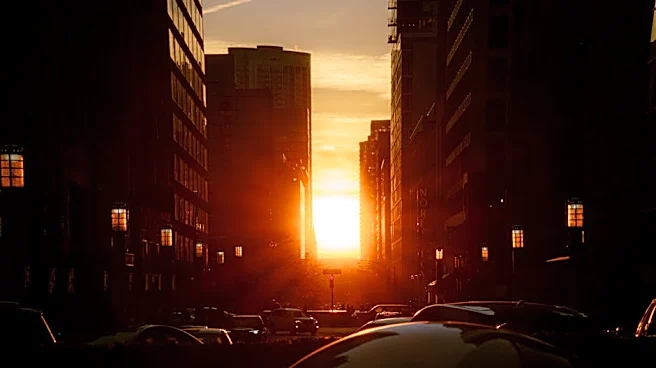
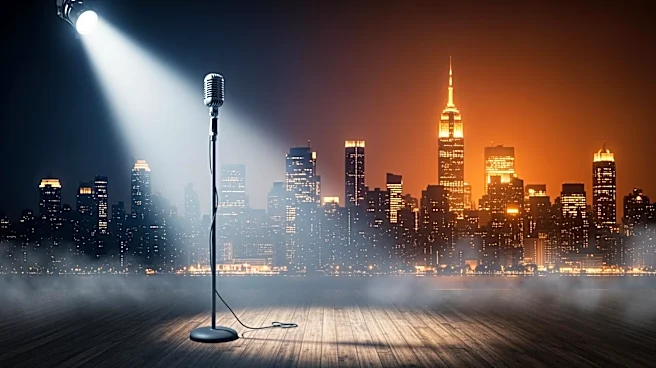
Manhattanhenge is a phenomenon where the setting sun aligns perfectly with the east-west streets of Manhattan, creating a striking visual effect. This occurs four times a year, casting a golden light through the city's streets. The alignment was not intentional;
it resulted from the 1811 Commissioners' Plan, which aimed to create a marketable real estate map. Neil deGrasse Tyson coined the term 'Manhattanhenge' to describe this event, drawing a parallel to Stonehenge's astronomical alignments.
Why It's Important?
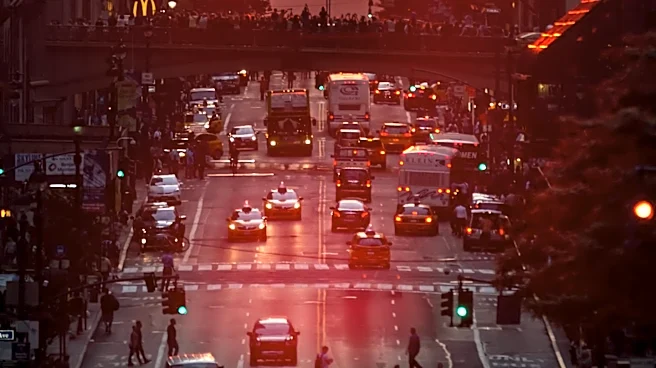
Manhattanhenge has become a cultural event in New York City, attracting photographers and tourists who gather to witness the unique alignment. It highlights the intersection of urban planning and natural phenomena, offering a moment of reflection on the city's design and its unintended astronomical significance. The event underscores the impact of urban infrastructure on cultural experiences and the ways in which cities can inadvertently create connections with natural events.
What's Next?
As Manhattanhenge continues to gain popularity, it may lead to increased tourism and media attention during the alignment dates. The event could inspire similar observations in other cities with grid layouts, fostering a broader appreciation for the interplay between urban design and natural phenomena. Future discussions may explore the potential for intentional urban planning that incorporates astronomical alignments, enhancing cultural and aesthetic experiences in city environments.