







What's Happening?
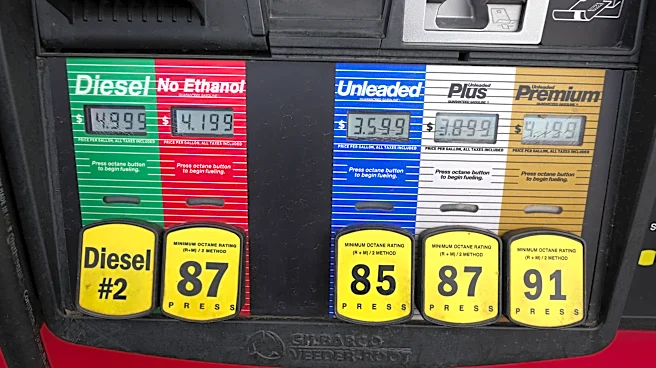
The Bureau of Labor Statistics reported that U.S. wholesale inflation rose to 4% in March, the highest annual rate in three years, driven by a 15.7% increase in gasoline prices. The Producer Price Index (PPI) increased by 0.5% from February, reflecting
the impact of rising energy costs due to the conflict in Iran. Despite the significant rise, the PPI figures were better than expected, as economists had predicted a 1.1% increase. Falling food prices and stable service prices helped mitigate the overall impact of rising oil prices. The PPI serves as a potential indicator of future consumer price trends, with some components feeding into the Federal Reserve's preferred inflation gauge, the Personal Consumption Expenditures (PCE) price index.
Why It's Important?
The rise in wholesale inflation highlights the broader economic impact of geopolitical tensions, particularly in the energy sector. As a precursor to consumer inflation, the PPI's increase suggests that consumers may face higher prices in the coming months. This development poses a challenge for the Federal Reserve, which aims to maintain inflation at a 2% target rate. The central bank's response to these inflationary pressures will be crucial in shaping economic policy and market expectations. The situation underscores the interconnectedness of global events and domestic economic conditions.
What's Next?
The Federal Reserve is likely to continue monitoring inflation trends closely, with potential implications for interest rate policy. The ongoing conflict in Iran and its impact on energy prices will remain a key concern for economic policymakers. Businesses and consumers should prepare for potential price increases, particularly in energy-dependent sectors. The situation highlights the need for strategic economic planning in the face of geopolitical uncertainties.