


What's Happening?
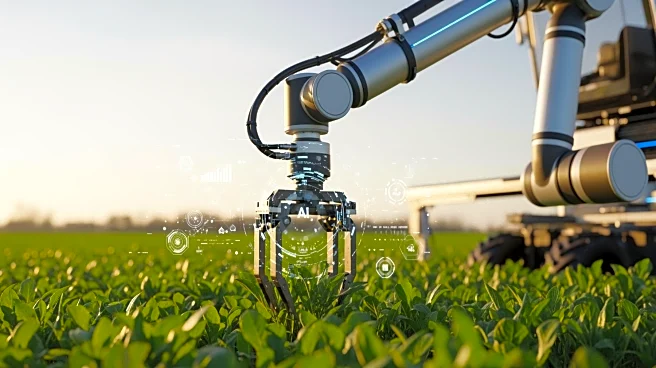
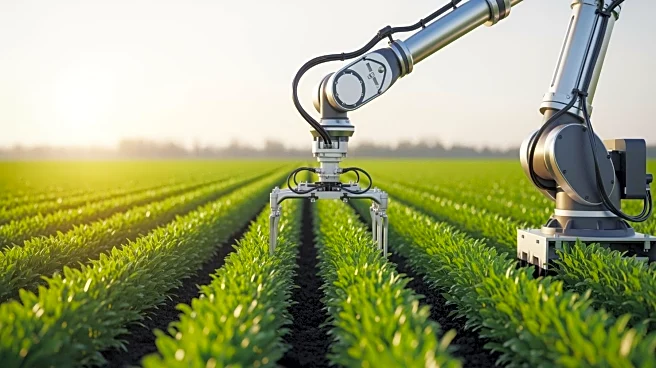
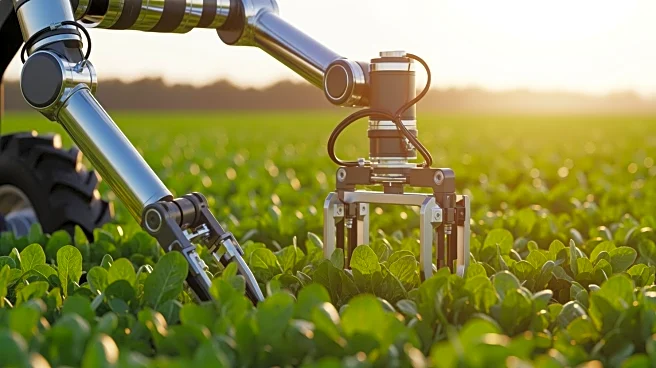
Aigen, a company specializing in agricultural robotics, has developed autonomous robots that utilize AI-driven technology to remove herbicide-resistant weeds and improve crop yield. These robots operate without chemicals, using renewable energy, and provide
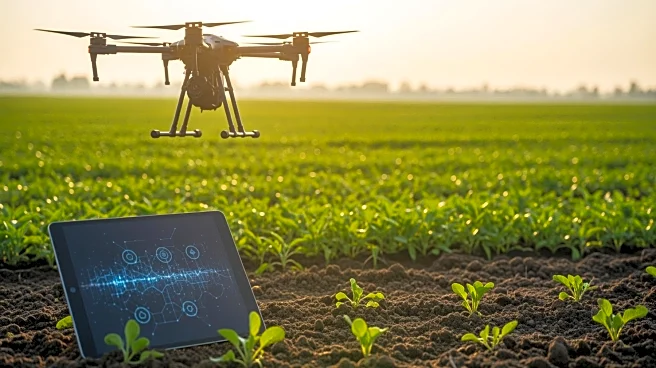
real-time, field-level data to enhance decision-making. Aigen's initial machine learning pipeline faced challenges such as connectivity constraints, high data labeling costs, and limited computational power. To address these, Aigen adopted a cloud-native approach using Amazon SageMaker AI, which enabled scalable and automated operations. This transformation increased image labeling throughput by 20 times and reduced costs by 22.5 times, allowing for rapid scaling and innovation in sustainable farming.
Why It's Important?
The adoption of AI-driven robotics in agriculture represents a significant shift towards more sustainable farming practices. By reducing reliance on chemical herbicides and improving crop yields, Aigen's technology offers an eco-friendly and cost-effective solution to traditional weed management. This advancement not only benefits farmers by enhancing efficiency and reducing costs but also contributes to environmental conservation. The use of AI in agriculture is poised to transform the industry, offering scalable solutions that address key challenges such as labor shortages and resource constraints. As the demand for sustainable farming practices grows, Aigen's approach could serve as a model for future innovations in the sector.
What's Next?
Aigen's continued expansion and refinement of its robotic fleet are expected to further enhance sustainable farming practices. The company plans to leverage its cloud-native architecture to continuously improve its models and adapt to real-world conditions. This ongoing development will likely lead to increased adoption of AI-driven solutions in agriculture, potentially influencing policy and industry standards. As Aigen's technology gains traction, other companies may follow suit, accelerating the shift towards more sustainable and efficient farming methods. The integration of AI in agriculture could also open new markets and opportunities for collaboration across the industry.
Beyond the Headlines
The ethical implications of using AI in agriculture are significant, as it raises questions about the balance between technological advancement and traditional farming practices. While AI-driven robots offer numerous benefits, they also challenge existing labor structures and may lead to job displacement. Additionally, the reliance on AI for decision-making in agriculture necessitates careful consideration of data privacy and security. As the industry evolves, stakeholders must address these concerns to ensure that technological progress aligns with ethical standards and supports the broader goals of sustainability and social responsibility.