



What's Happening?
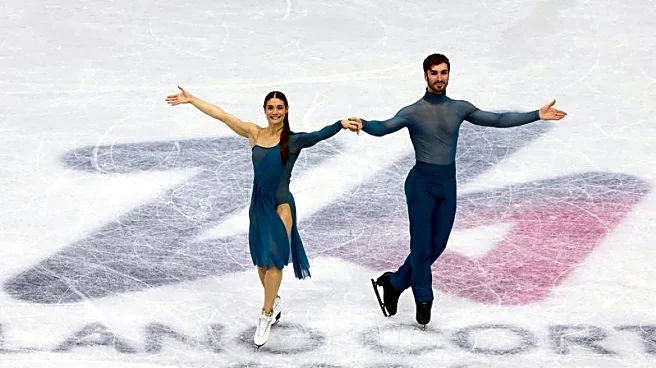
U.S. Figure Skating has decided not to appeal the scoring decision that awarded Madison Chock and Evan Bates a silver medal in the ice dance competition at the Milan Cortina 2026 Olympic Winter Games. Despite their undefeated season and a performance they believed was worthy of gold, the pair was edged out by France's Laurence Fournier Beaudry and Guillaume Cizeron. The decision not to appeal has disappointed some fans, who initiated an online petition urging the International Skating Union (ISU) and the International Olympic Committee to review the scores. U.S. Figure Skating praised Chock and Bates for their performances, which contributed to the U.S. team's gold medal in the team event. The ISU has expressed confidence in the scoring, citing
the multiple layers of review in place to ensure fairness.
Why It's Important?
The decision not to appeal the scoring has significant implications for U.S. Figure Skating and its athletes. It highlights the complexities and controversies often associated with subjective scoring in figure skating, which can impact athletes' careers and national standings. For Chock and Bates, the silver medal adds to their accolades but also underscores the challenges of competing in a sport where judging can be contentious. The situation also reflects broader issues within international sports competitions, where national biases and judging discrepancies can influence outcomes. This event may prompt discussions within U.S. Figure Skating about how to better support athletes in future competitions and address potential scoring controversies.
What's Next?
Moving forward, U.S. Figure Skating plans to engage in discussions with Chock and Bates to determine the best ways to support them and the sport's future. These discussions may lead to strategic changes in how the organization approaches international competitions and scoring disputes. Additionally, the broader figure skating community may see increased advocacy for transparency and fairness in judging, potentially influencing future rule changes or reforms within the ISU. The outcome of these discussions and any subsequent actions could shape the competitive landscape for U.S. figure skaters in upcoming events.