






What's Happening?
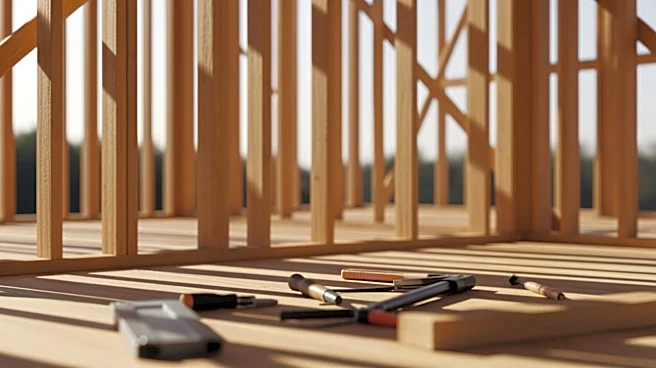
A recent report from Harvard University's Joint Center for Housing Studies (JCHS) forecasts a significant slowdown in home improvement spending in the U.S. The Leading Indicator of Remodeling Activity (LIRA) report projects that growth in national home improvement and
repair spending for owner-occupied homes will decelerate to just 0.5% by early 2027, down from a 2% growth rate in early 2026. This slowdown is attributed to economic uncertainty, rising labor and material costs, and higher interest rates, which are making homeowners hesitant to invest in large remodeling projects. The report highlights that the slowdown in new-home construction and stagnant sales of existing homes are contributing factors. Additionally, labor shortages in the construction industry, exacerbated by federal immigration policies, are driving up costs and impacting the availability of skilled workers.
Why It's Important?
The anticipated slowdown in remodeling spending has significant implications for the U.S. economy, particularly the construction and home improvement sectors. As homeowners become more cautious about large expenditures, businesses in these industries may face reduced demand, potentially leading to lower revenues and job cuts. The rising costs of labor and materials, coupled with high interest rates, are likely to further strain these sectors. This trend could also impact related industries, such as real estate and retail, as consumer confidence and spending power are affected. The slowdown may also influence housing market dynamics, as fewer renovations could lead to a decrease in home values and sales activity.
What's Next?
Despite the current slowdown, long-term trends suggest that remodeling activity may pick up in the future. As the housing stock ages and the average age of homeowners increases, there will be a growing need for home improvements to accommodate changing needs. This could lead to a resurgence in demand for remodeling services in the coming years. However, the industry will need to address labor shortages and adapt to evolving economic conditions to capitalize on these opportunities. Policymakers may also need to consider measures to support the construction industry and address immigration policies that impact labor availability.