





What's Happening?
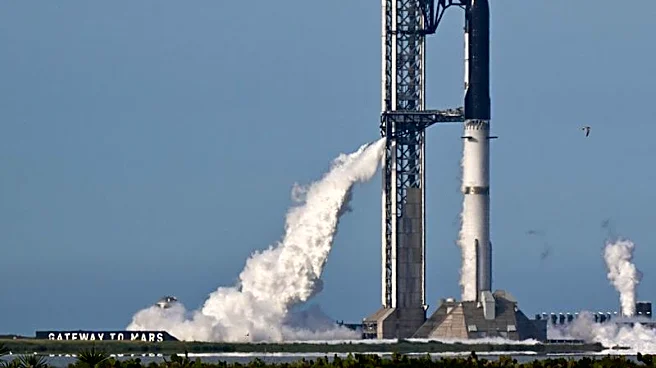
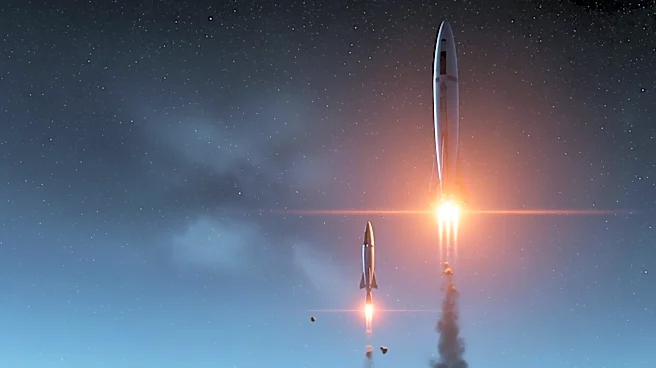
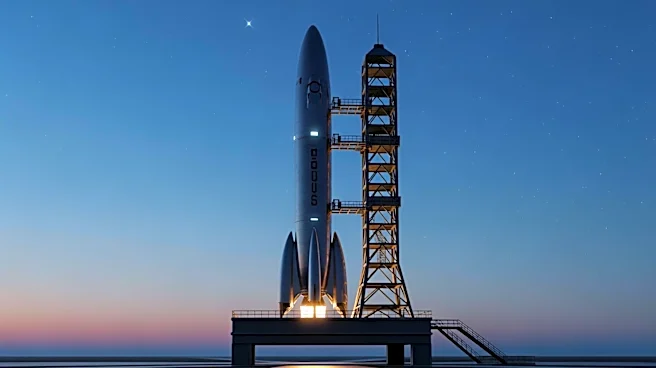
SpaceX conducted a test flight of its Starship V3 rocket on May 22, 2026, from its facility in Boca Chica Beach, Texas. The launch, which took place at 6:30 p.m. EDT, was part of SpaceX's ongoing efforts to develop a fully reusable launch vehicle. Despite
the successful lift-off, the Super Heavy booster, which is the first stage of the rocket, experienced a failure shortly after stage separation. Several engines failed to reignite, leading to the booster breaking apart and falling into the ocean. The Starship upper stage, however, managed to reach a suborbital trajectory and deployed 22 simulator Starlink satellites. The test flight aimed to demonstrate various updates to the Super Heavy booster, the Starship upper stage, and the Raptor engines.
Why It's Important?
The test flight is significant as it represents SpaceX's continued efforts to develop a fully reusable rocket system, which could drastically reduce the cost of space travel. The ability to reuse rockets is crucial for SpaceX's long-term goals, including the establishment of a human settlement on Mars. The success of the Starship program is also vital for SpaceX's commercial ambitions, such as expanding its Starlink satellite internet service. The deployment of more satellites could enhance internet connectivity, especially in remote areas. Additionally, the test flight's outcomes could impact SpaceX's plans to support NASA missions, including the Artemis program, which aims to return humans to the moon.
What's Next?
Following the test flight, SpaceX is expected to analyze the data to understand the causes of the booster failure and make necessary adjustments. The company plans to continue its test flights, with a full production pipeline indicating the completion of around 10 more Starships and several boosters this year. These ongoing tests are crucial for refining the technology and achieving the goal of a fully reusable launch system. SpaceX's ability to address the technical challenges encountered during this flight will be critical for its future missions and its role in the broader space exploration landscape.