






What's Happening?
Recent data reveals that insurance premiums for new-construction homes are significantly lower than those for older homes, offering potential savings for homeowners. According to an analysis by Insurify for Realtor.com, the average annual premium for a newly
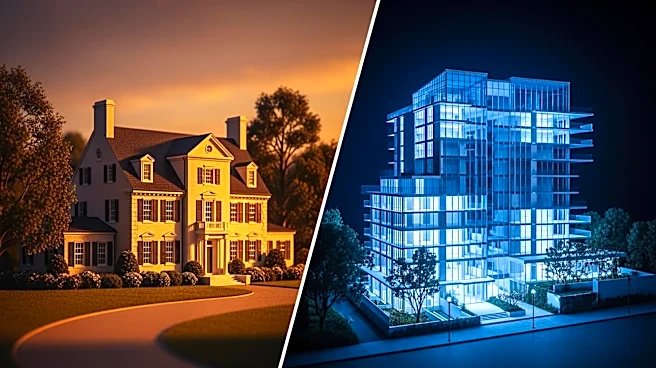
built home in 2025 was 35% lower than that for a 20-year-old home, translating to $1,002 in annual savings. This gap widens to 38% when compared to 40-year-old properties, providing new-construction homeowners with $1,120 in savings. These findings are part of broader research indicating that new-construction buyers can save $25,000 over their first decade of ownership due to lower utility bills and fewer major repairs. The savings are attributed to the newer construction standards and materials, which reduce the likelihood of insurance claims.
Why It's Important?
The lower insurance premiums for new-construction homes represent a significant financial advantage for potential buyers, especially in an era of high mortgage rates and economic challenges. These savings can make new homes more affordable and attractive, potentially influencing buyer preferences and market trends. The reduced insurance costs, combined with lower maintenance expenses, can expand a buyer's budget, allowing them to afford more than they initially anticipated. This financial relief is particularly valuable in regions prone to severe weather, where newer homes are better equipped to withstand damage, further enhancing their appeal.
Beyond the Headlines
The trend towards new-construction homes could have broader implications for the housing market, potentially driving demand for newer properties and influencing construction practices. As buyers become more aware of the long-term cost benefits, there may be increased pressure on builders to adopt modern construction methods and materials that enhance durability and safety. Additionally, the insurance industry may need to adjust its models to account for the evolving risk profiles of newer versus older homes, potentially leading to further differentiation in premium structures.