



What's Happening?
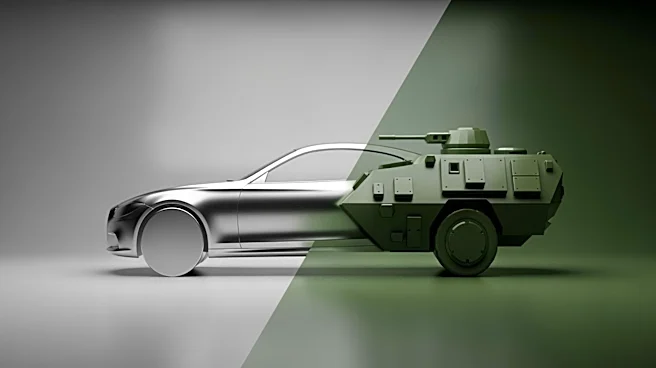
The European car industry is exploring opportunities in the defense sector as it faces significant challenges, including declining demand for electric vehicles and increased competition from Chinese manufacturers. Companies like Renault and Volkswagen
are considering partnerships with defense firms to produce military equipment, such as drones and missile defense components. This shift, dubbed the 'anything but autos' trade by analysts, is seen as a potential lifeline for the struggling industry. The European defense sector is experiencing growth due to increased demand for rearmament following geopolitical tensions, particularly after Russia's invasion of Ukraine. This has led to discussions about repurposing automotive facilities for defense production, which could help mitigate job losses in the automotive sector.
Why It's Important?
The potential pivot to defense production represents a strategic shift for the European car industry, which has been a significant economic driver. By diversifying into defense, automakers could leverage existing manufacturing capabilities to tap into a growing market, potentially stabilizing their financial performance. This move could also have broader implications for the European economy, as it may lead to increased investment in defense infrastructure and technology. However, there are concerns about the feasibility of this transition, given the differences in production processes and market dynamics between the automotive and defense sectors. The success of this strategy could influence the future direction of the European car industry and its ability to compete globally.
What's Next?
As automakers explore defense sector opportunities, they will need to navigate regulatory and logistical challenges associated with military production. Companies may seek government support and partnerships to facilitate this transition. The outcome of these efforts will depend on the ability of automakers to adapt their operations and workforce to meet defense industry requirements. Additionally, the response from labor unions and other stakeholders will be crucial, as they may raise concerns about job security and the ethical implications of shifting to defense production. The industry's success in this endeavor could set a precedent for other sectors facing similar challenges.