


What's Happening?
Alain Gomis, a filmmaker known for his works that bridge cultural and geographical divides, has presented his latest film, 'Dao', at the Berlin Film Festival. The film is a sprawling narrative that unfolds between France and Guinea-Bissau, reflecting Gomis' own familial ties to both regions. 'Dao' is characterized by its unconventional storytelling, blending elements of fiction and documentary. The film features a mix of professional actors and Gomis' own family members, creating a unique ensemble cast. The narrative centers around two major events: a wedding in France and a death commemoration in Guinea-Bissau, with the story oscillating between these two settings. The film's structure is non-linear, lacking a traditional plot, and instead
focuses on the collective experience of its characters.
Why It's Important?
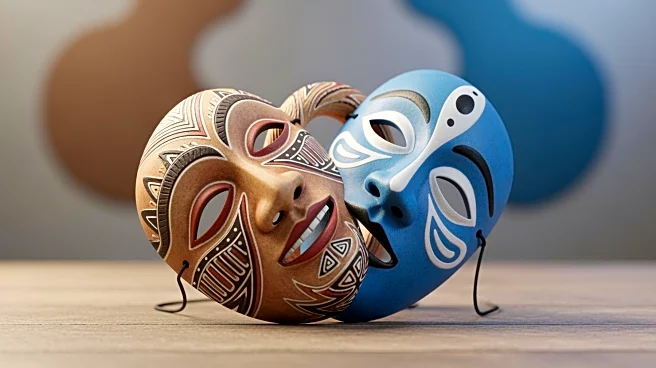
The film 'Dao' is significant as it highlights the complexities of cultural identity and the immigrant experience, themes that are increasingly relevant in today's globalized world. By showcasing the duality of life between France and Guinea-Bissau, Gomis offers a nuanced perspective on the challenges and richness of living between two cultures. This film could resonate with audiences who have experienced similar cultural dichotomies, providing a platform for dialogue about migration, assimilation, and heritage. Additionally, 'Dao' challenges conventional filmmaking by blurring the lines between reality and fiction, potentially influencing future filmmakers to explore more experimental narrative forms.
What's Next?
Following its premiere at the Berlin Film Festival, 'Dao' may continue to make rounds in international film circuits, potentially reaching a wider audience. The film's reception could influence Gomis' future projects and encourage other filmmakers to explore similar themes of cultural duality and non-traditional storytelling. As the film gains attention, it may also spark discussions on the representation of African cultures in cinema and the importance of diverse narratives in the film industry.
Beyond the Headlines
Beyond its immediate narrative, 'Dao' raises questions about the role of cinema in preserving cultural heritage and the power of storytelling in bridging cultural divides. The film's use of real family members and its improvisational style suggest a deeper exploration of authenticity in art. This approach may inspire discussions on the ethical dimensions of using personal and familial stories in public art forms, as well as the responsibilities of filmmakers in representing real-life experiences.