



What's Happening?
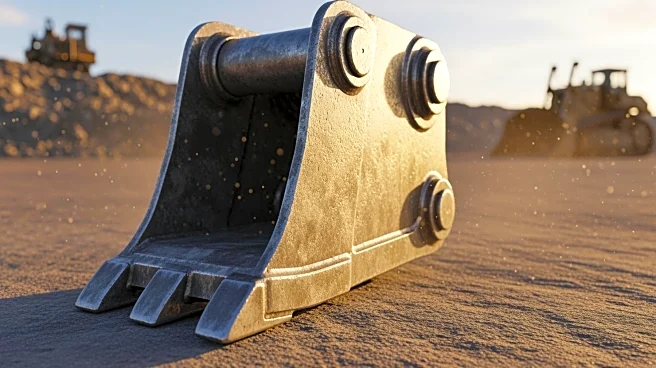
Weir's ESCO division has introduced the Nexsys Ripper System, a new innovation designed to improve the performance of large dozers, specifically the Cat D11 models, in mining, aggregate, and heavy construction applications. This system is engineered to handle the demanding conditions of ground engaging tools by utilizing premium grade alloys and advanced manufacturing techniques. The Nexsys Ripper System was developed using finite element analysis and discrete element modeling, which contribute to its enhanced strength and stability. Extensive field testing has demonstrated that the system offers increased reliability, safer in-field replacement, and superior performance compared to traditional ripper systems. Key features include a stronger
and more stable nose, an optimized point profile for better material flow and penetration, and a sealed hammerless lock for easier point replacement.
Why It's Important?
The introduction of the Nexsys Ripper System is significant for industries reliant on large dozers, such as mining and heavy construction, as it promises to enhance operational efficiency and safety. By increasing system reliability and reducing downtime, the system can lead to higher productivity and cost savings for companies. The safer in-field replacement feature is particularly important for protecting site personnel, reducing the risk of accidents during maintenance. Additionally, the improved performance and longer lifespan of the system can result in lower operational costs and increased output, providing a competitive edge to businesses that adopt this technology.
What's Next?
As the Nexsys Ripper System becomes available, it is likely that mining and construction companies will evaluate its performance in real-world conditions. The system's adoption could lead to further innovations in ground engaging tools, as companies seek to capitalize on the benefits of increased efficiency and safety. Stakeholders in the industry may also monitor the system's impact on operational costs and productivity, potentially influencing future investments in similar technologies.