



What's Happening?
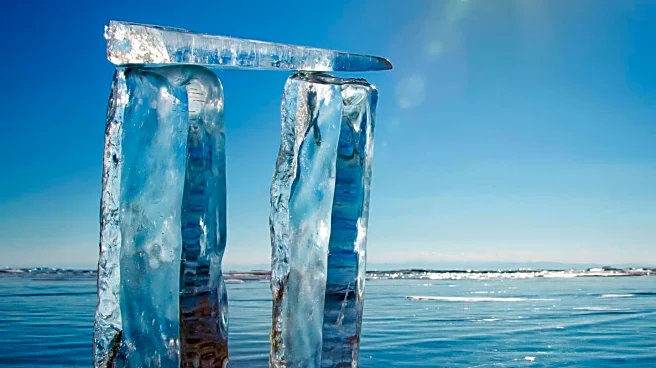
A food scientist has shared insights on how to make clear ice at home, a process that involves understanding the physics and chemistry of freezing. Unlike the cloudy ice typically produced in home freezers, clear ice is achieved through a method called directional freezing. This technique involves freezing water in a single direction, which prevents air bubbles and impurities from being trapped in the ice, resulting in a clearer appearance. The process requires using an insulated container to control the freezing direction, typically from the top down, allowing impurities to be concentrated in one area that can be removed. This method is more effective than common myths such as using distilled or boiled water, which do not prevent cloudiness.
Why It's Important?
The ability to make clear ice at home is significant for both aesthetic and practical reasons. Clear ice is denser and melts slower than cloudy ice, which means it dilutes drinks less, preserving their intended flavor. This is particularly important for cocktail enthusiasts and those in the hospitality industry who seek to enhance the presentation and quality of beverages. Additionally, clear ice can be cut into various shapes without crumbling, offering more versatility in drink presentation. Understanding the science behind clear ice production can lead to better home practices and potentially influence commercial ice-making techniques.
What's Next?
As more people become aware of the benefits and methods of making clear ice, there may be an increase in demand for insulated containers and commercial clear ice trays designed for home use. This could lead to innovations in ice-making products and techniques, both for home consumers and the hospitality industry. Additionally, further exploration into the science of freezing could yield new insights into other applications, such as food preservation and storage.