





What's Happening?
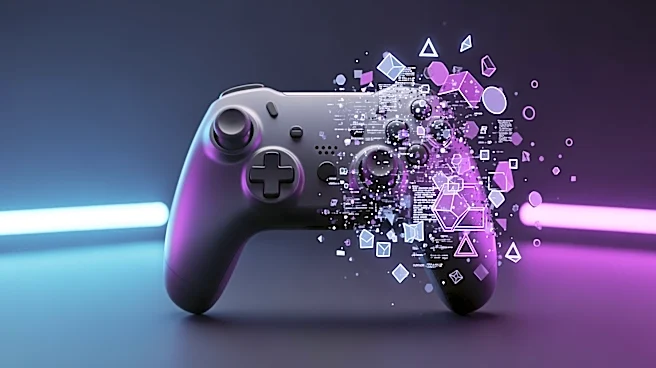
Unity AI, a suite of AI-powered game development tools, is transforming the way creators approach game design by automating tasks and generating assets. These tools are part of a broader trend in the gaming industry where AI is increasingly used to streamline
development processes and enhance creativity. Unity AI's capabilities allow developers to focus more on creative aspects by handling repetitive tasks, thus speeding up the production cycle. The tools are designed to integrate seamlessly into existing workflows, providing developers with the flexibility to iterate faster and solve everyday challenges more efficiently. This development is part of a larger movement within the tech industry to leverage AI for enhancing productivity and innovation.
Why It's Important?
The integration of AI into game development represents a significant shift in how games are created, potentially lowering the barrier to entry for indie developers and small studios. By automating routine tasks, AI tools like those offered by Unity can reduce development time and costs, allowing developers to allocate more resources to creative and innovative aspects of game design. This democratization of game development tools could lead to a more diverse range of games and ideas entering the market. Additionally, the use of AI in game development can lead to more personalized and adaptive gaming experiences for players, as AI can be used to tailor game dynamics to individual player preferences.
What's Next?
As AI tools become more sophisticated, their role in game development is likely to expand. Developers may begin to rely more heavily on AI for not just asset generation and task automation, but also for more complex tasks such as narrative design and player interaction modeling. The gaming industry could see a surge in innovative game mechanics and storytelling techniques as AI continues to evolve. Furthermore, as more developers adopt these tools, there may be a push for standardization and best practices in AI-driven game development, potentially leading to new industry standards and educational programs focused on AI in gaming.
Beyond the Headlines
The ethical implications of AI in game development are an emerging area of concern. As AI takes on more creative roles, questions about authorship and intellectual property rights may arise. Additionally, the use of AI in games raises questions about data privacy and the potential for AI to perpetuate biases present in training data. Developers and industry leaders will need to address these issues to ensure that AI is used responsibly and ethically in game development. The long-term impact of AI on employment within the gaming industry is also a topic of discussion, as automation could potentially reduce the need for certain roles while creating demand for new skills.