



What's Happening?
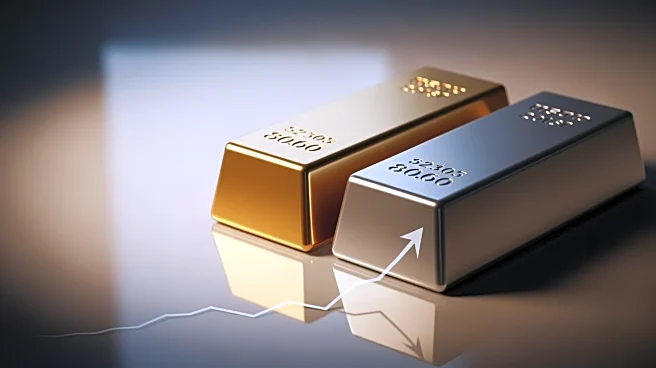
Recent reports indicate that gold and silver prices are expected to see substantial increases by 2026. UBS has projected that gold will reach $5,000 per ounce by the first quarter of 2026, driven by a broader commodities rally. Analysts have attributed these price movements to increased safe-haven demand. Additionally, Bank of America's Widmer has stated that gold will serve as a primary hedge and performance driver in 2026, with silver potentially reaching prices between $135 and $309. The reports also highlight the role of demand across key channels and end-use segments in shaping consumption patterns, as well as the impact of input availability, production efficiency, and regulatory standards on supply. The analysis provides a comprehensive
view of the global unwrought silver industry, tracking demand, supply, and trade flows across the worldwide value chain.
Why It's Important?
The projected increase in gold and silver prices is significant for various stakeholders, including investors, miners, and industries reliant on these metals. As gold and silver are often considered safe-haven assets, their rising prices could indicate increased market volatility or economic uncertainty, prompting investors to seek stability. For miners, the anticipated price gains present a capital allocation opportunity, potentially leading to increased exploration and production activities. Industries that use these metals, such as electronics and jewelry, may face higher input costs, affecting pricing strategies and profit margins. The broader commodities rally could also influence global trade dynamics, with cost-competitive producers benefiting from increased export opportunities.
What's Next?
As the forecasted price increases unfold, stakeholders may adjust their strategies accordingly. Investors might increase their holdings in gold and silver to hedge against market risks, while miners could ramp up production to capitalize on higher prices. Industries dependent on these metals may explore alternative materials or adjust their supply chains to mitigate cost impacts. Additionally, regulatory changes and technological advancements could further influence market dynamics, affecting supply and demand patterns. Monitoring these developments will be crucial for stakeholders to navigate the evolving landscape effectively.
Beyond the Headlines
The anticipated rise in gold and silver prices could have broader implications beyond immediate market impacts. Economically, it may signal shifts in global economic conditions, influencing monetary policies and inflation rates. Culturally, the increased value of these metals could affect consumer behavior, particularly in regions where gold and silver hold significant cultural importance. Environmentally, higher prices might drive more intensive mining activities, raising concerns about ecological impacts and sustainability. These factors highlight the complex interplay between economic, cultural, and environmental considerations in the commodities market.