

What's Happening?
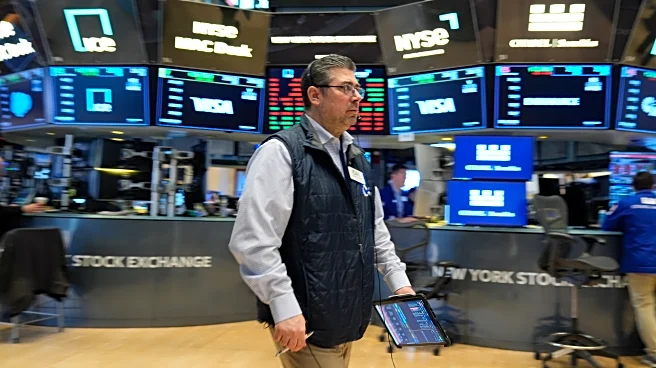
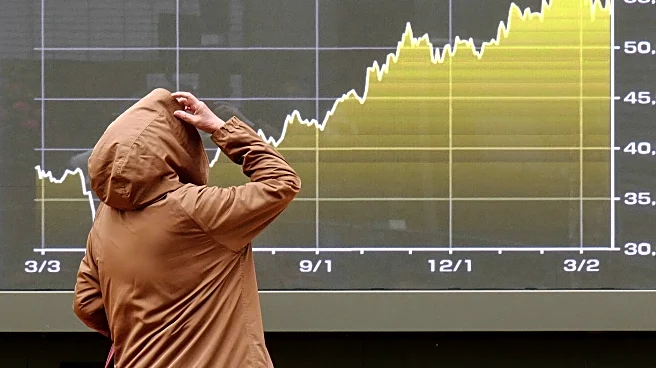
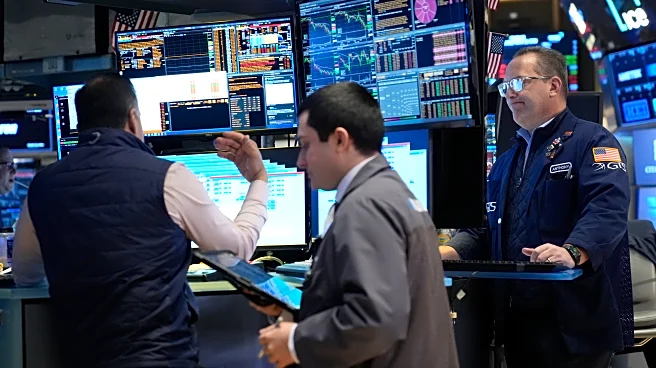
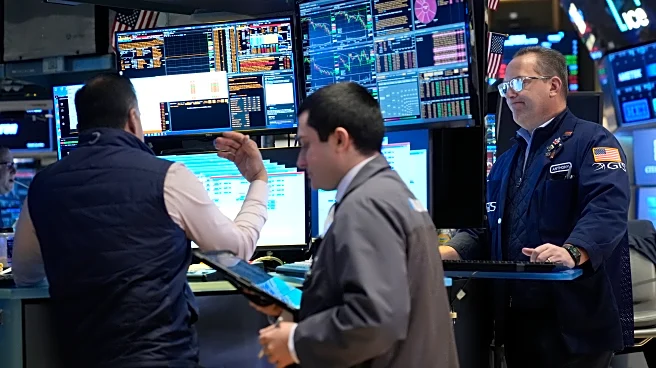
U.S. stock markets experienced a significant surge on Monday following President Trump's decision to postpone military strikes on Iran. The Dow Jones Industrial Average rose by approximately 900 points, marking a 2% increase. Similarly, the S&P 500 and
the Nasdaq Composite saw gains of around 1.9% and 2.1%, respectively. This positive market reaction came after President Trump announced that he had instructed a delay in military action against Iran's energy infrastructure. The decision was attributed to 'very good and productive' talks between the U.S. and Tehran, which are set to continue throughout the week. The announcement alleviated market fears that had been heightened by escalating tensions and rhetoric over the weekend, including an ultimatum from Trump regarding the Strait of Hormuz. In response to the news, oil prices fell sharply, with West Texas Intermediate crude futures dropping by about 9% and Brent crude also declining significantly.
Why It's Important?
The postponement of military action against Iran by President Trump has significant implications for both geopolitical stability and economic markets. By easing tensions in the Middle East, the decision has provided a sense of relief to investors, leading to a rally in U.S. stock markets. This development underscores the sensitivity of global markets to geopolitical events, particularly those involving major oil-producing regions. The drop in oil prices following the announcement also highlights the interconnectedness of political decisions and commodity markets. For the U.S. economy, the stock market surge reflects investor optimism and could contribute to increased consumer and business confidence. However, the situation remains fluid, and any changes in diplomatic relations or military actions could quickly alter market dynamics.
What's Next?
The continuation of talks between the U.S. and Iran will be closely monitored by investors and policymakers alike. The outcome of these discussions could have far-reaching consequences for international relations and economic stability. Should the talks lead to a de-escalation of tensions, it could further bolster market confidence and stabilize oil prices. Conversely, any breakdown in negotiations or resumption of hostilities could reignite market volatility. Additionally, the Federal Reserve's response to inflationary pressures and interest rate decisions will be critical in shaping economic conditions in the coming months.