









What's Happening?
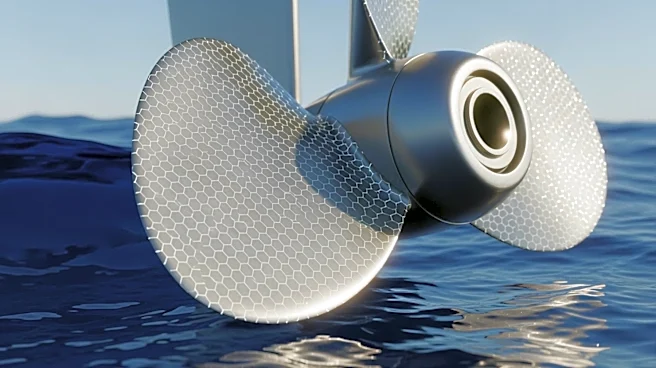
GIT Coatings has launched XGIT-VORTEX™, a next-generation graphene-based propeller coating system, at Posidonia 2026. This new system is designed to enhance propeller performance by reducing fouling, cavitation damage, and maintaining smoothness over
the drydock cycle. The XGIT-VORTEX™ system utilizes GIT's Amphiphilic Graphene Nanonetwork (AGN) technology, featuring a three-layer coating that includes a foul-release topcoat and a reinforced mid-coat. These features aim to provide up to 5% fuel savings and improve propeller efficiency, which is crucial for reducing fuel consumption and emissions in the maritime industry. The launch event was attended by industry stakeholders, including Mo AlGermozi, CEO of GIT Coatings, and Andy McKeran, Chief Growth Officer of Lloyd’s Register.
Why It's Important?
The introduction of the XGIT-VORTEX™ system represents a significant advancement in marine coating technology, offering shipowners a more sustainable and efficient solution for propeller maintenance. By improving propeller performance, the system can help reduce operational costs and emissions, aligning with the maritime industry's goals for decarbonization and sustainability. The collaboration with Lloyd’s Register further validates the system's effectiveness and potential impact on the industry. As shipowners increasingly prioritize lifecycle efficiency and emissions reduction, technologies like XGIT-VORTEX™ are becoming essential components of operational strategies, potentially influencing future developments in marine coatings and propulsion optimization.
What's Next?
Following the launch, GIT Coatings is expected to focus on expanding the adoption of the XGIT-VORTEX™ system across the global maritime sector. The company may engage with shipowners and operators to demonstrate the system's benefits and support its integration into existing fleets. Additionally, GIT Coatings may continue to innovate and develop new technologies to further enhance marine coatings and support the industry's decarbonization efforts. The success of XGIT-VORTEX™ could lead to increased interest in graphene-based technologies and drive further advancements in sustainable marine solutions.