
What's Happening?
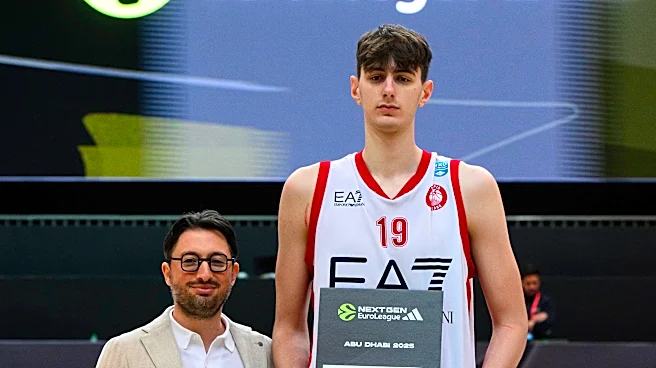
The UCLA Bruins have recently signed Gunars Grinvalds, an international basketball player from Latvia, who previously played for Real Madrid in Spain's top league. Grinvalds, a 6-foot-7 player known for his
three-point shooting and playmaking skills, joins a strong incoming freshman class at UCLA. However, his eligibility to play may be affected by new NCAA guidelines aimed at limiting professional overseas talent from participating in college basketball. These guidelines are designed to prevent players with professional experience, such as those from the EuroLeague and Liga ACB, from joining college teams. While Grinvalds is currently part of the Bruins, his eligibility could be questioned if the NCAA enforces these new rules strictly.
Why It's Important?
The potential ineligibility of Gunars Grinvalds under the new NCAA guidelines highlights the ongoing tension between college athletics and professional leagues. The NCAA's move to restrict players with professional experience from joining college teams is an attempt to maintain the amateur status of college sports. This decision could significantly impact teams like UCLA, which rely on international talent to enhance their rosters. If enforced, these guidelines could limit the pool of available talent for college teams, potentially affecting their competitiveness and the overall quality of college basketball. For players like Grinvalds, it raises questions about their future in college sports and their path to professional careers.
What's Next?
If the NCAA decides to enforce the new guidelines rigorously, UCLA and other colleges may need to reassess their recruitment strategies, particularly concerning international players with professional experience. The Bruins, who are looking to improve after an inconsistent season, might have to find alternative ways to strengthen their roster. Additionally, the NCAA's decision could prompt discussions among stakeholders about the balance between maintaining amateurism and allowing talented players to develop in college sports. The outcome of Grinvalds' situation could set a precedent for how similar cases are handled in the future.