


What's Happening?
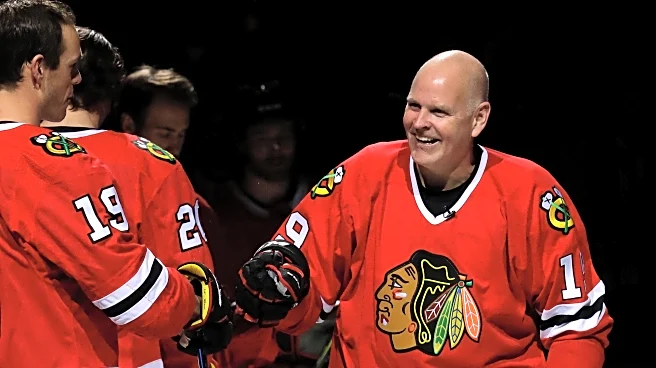
Troy Murray, a celebrated figure in the Chicago Blackhawks organization, passed away at the age of 63. Murray, who was diagnosed with cancer in August 2021, had a distinguished career both as a player and broadcaster. He played 12 of his 15 NHL seasons
with the Blackhawks, earning the Selke Trophy in 1985-86 as the league's best defensive forward. After retiring, Murray transitioned to broadcasting, serving as the Hawks' radio analyst for 27 years. His contributions to the team extended beyond the ice, as he was deeply involved in the Blackhawks alumni association, supporting the community and fellow players. His passing has left a significant void in the organization, with many expressing their condolences and admiration for his impact.
Why It's Important?
Troy Murray's death marks the loss of a significant figure in the Chicago Blackhawks community. His influence extended beyond his playing days, as he became a beloved broadcaster and mentor to younger players. Murray's dedication to the team and his role in the alumni association helped foster a sense of community and continuity within the organization. His passing is not only a personal loss to those who knew him but also a professional loss to the Blackhawks, who benefited from his leadership and experience. The team's response highlights the deep respect and affection held for Murray, underscoring his importance in the fabric of the Blackhawks' history.
What's Next?
The Chicago Blackhawks are expected to honor Troy Murray's legacy in the coming days. Funeral arrangements have yet to be announced, but the team and its community will likely pay tribute to Murray's contributions both on and off the ice. The organization may hold commemorative events or establish initiatives to continue Murray's work in supporting former players and community engagement. As the team processes this loss, they will aim to uphold the values and spirit that Murray embodied throughout his career.
Beyond the Headlines
Troy Murray's passing prompts reflection on the broader impact of sports figures beyond their athletic achievements. His role in the Blackhawks alumni association highlights the importance of community and support networks for retired athletes. Murray's ability to connect with players and fans alike demonstrates the cultural significance of sports figures in fostering community identity and continuity. His legacy may inspire future initiatives within the Blackhawks and other sports organizations to prioritize player welfare and community engagement.