


What's Happening?
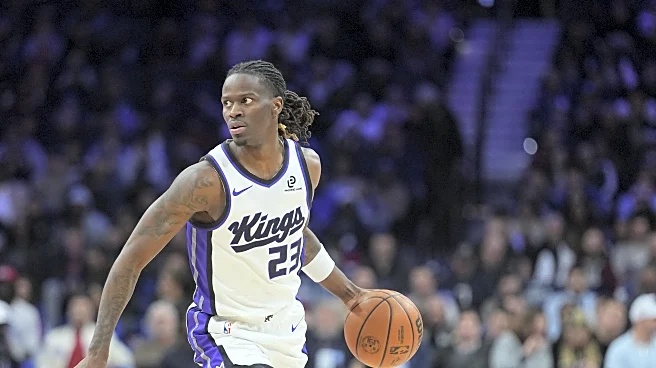
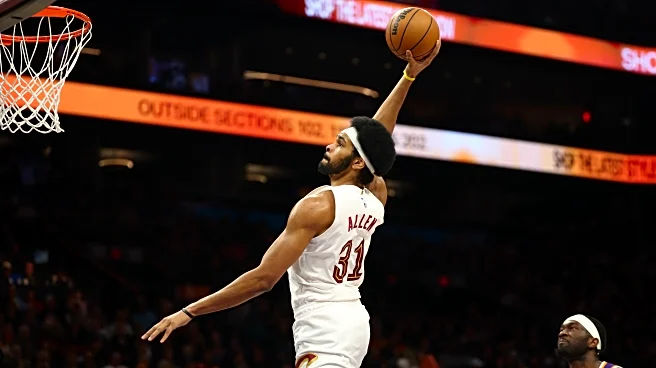
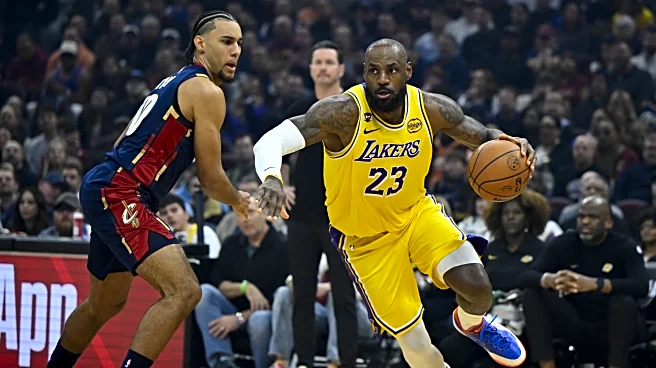
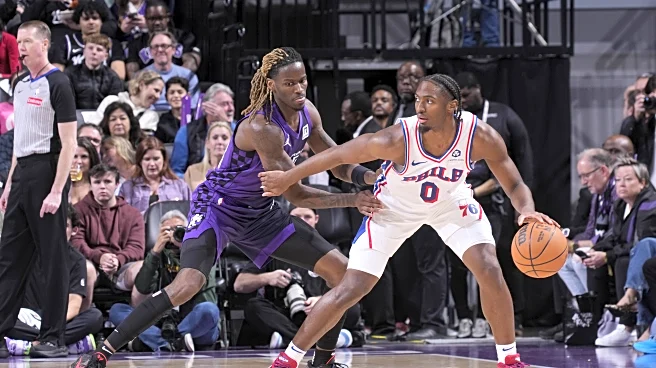
The Cleveland Cavaliers have completed a trade with the Sacramento Kings, acquiring guards Keon Ellis and Dennis Schröder in exchange for forward De'Andre Hunter. This move comes as the Cavaliers aim to bolster their defensive lineup and manage their salary cap. Hunter, who was previously acquired from the Atlanta Hawks, has struggled this season, prompting the Cavaliers to seek a trade. Ellis, known for his defensive prowess and three-point shooting, is expected to fill a key role in the Cavaliers' rotation. Schröder, included in the deal to balance salaries, brings veteran experience to the team. The trade also involves the Chicago Bulls, who will receive Kings forward Dario Saric and two future second-round picks.
Why It's Important?
This trade is significant
for the Cavaliers as it addresses both their immediate need for defensive strength and their long-term salary cap strategy. By acquiring Ellis, the Cavaliers gain a player who can contribute defensively and offensively, potentially improving their performance in the Eastern Conference. Moving Hunter's contract also provides financial flexibility for future roster adjustments. For the Kings, the trade allows them to offload contracts and potentially reshape their roster with the addition of Hunter, who, despite a challenging season, has shown potential in previous years. The inclusion of Schröder adds depth to the Cavaliers' backcourt, offering them more options in their guard rotation.
What's Next?
The Cavaliers will integrate Ellis and Schröder into their lineup, likely focusing on enhancing their defensive schemes and three-point shooting capabilities. The Kings, on the other hand, will evaluate Hunter's fit within their system and explore further roster moves to optimize their salary cap and team performance. Both teams may continue to explore additional trades or adjustments as the season progresses, especially with the trade deadline approaching. The impact of this trade will be closely watched by other NBA teams, potentially influencing their own trade strategies.