





What's Happening?
Career experts are cautioning against the trend of overworking in pursuit of job security, especially in the context of the increasing influence of artificial intelligence (AI) on the workforce. According to a report, 76% of full-time workers identify
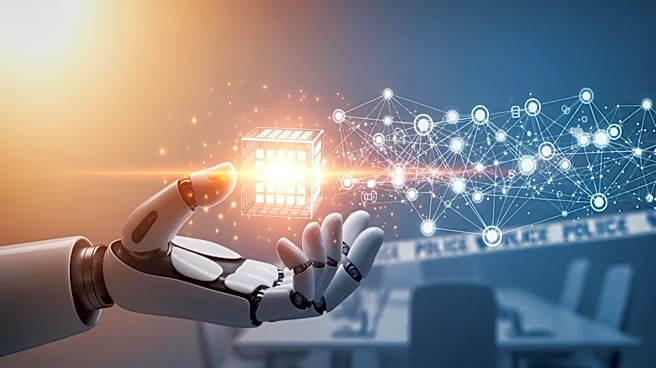
as workaholics, often driven by fears of layoffs or a deep commitment to their jobs. However, experts like Chelsea Jay, a leadership consultant, warn that this can lead to negative outcomes such as burnout, sleep deprivation, and reduced creativity. The rise of AI has contributed to an 'infinite workday,' where employees are constantly engaged with work beyond traditional hours. This trend is exacerbated by companies like Meta, which recently laid off thousands of employees, citing AI as a factor in restructuring. The report also highlights that 99% of C-suite executives anticipate reducing headcounts due to AI's impact on workflows.
Why It's Important?
The shift towards AI-driven work environments is reshaping job security and employee well-being. As companies increasingly rely on AI, the traditional notion of job stability is being challenged, leading to potential job cuts and restructuring. This has significant implications for the workforce, as employees may feel pressured to work longer hours to secure their positions, potentially harming their mental and physical health. The emphasis on overworking can also affect productivity and innovation, as burned-out employees are less effective. This situation calls for a reevaluation of workplace practices to prioritize mental health and sustainable work habits, ensuring that employees can contribute effectively without compromising their well-being.
What's Next?
As AI continues to influence the job market, companies may need to adopt new strategies to support their workforce. This could include implementing policies that promote work-life balance and mental health support. Employees are encouraged to assess their workloads and seek support where necessary, potentially leading to discussions about role expectations and time management. Organizations might also explore ways to integrate AI in a manner that complements human work rather than replacing it, fostering a collaborative environment that values both technological advancements and human contributions.