

What's Happening?
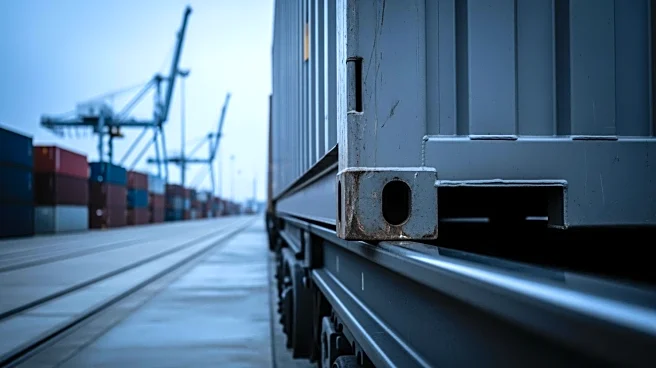
The Intermodal Association of North America (IANA) has reported a 5.9% annual decline in intermodal volumes for January 2026, marking a continuation of the downward trend observed in the previous months. The total volume for January was recorded at 1,469,047
units. This decline follows decreases of 0.1%, 4.1%, and 2.0% in December, November, and October, respectively. The report also highlighted a 7.2% annual decline in trailer volumes, while domestic containers saw a 2.5% decrease. ISO containers experienced an 8.9% drop. Despite these declines, the previous year, 2025, saw a 2.3% annual gain in total volume, driven by consumer spending and improved railroad performance.
Why It's Important?
The decline in intermodal volumes is significant as it reflects broader economic trends and challenges within the transportation sector. The decrease could impact various stakeholders, including logistics companies, shippers, and the broader supply chain. The report suggests that while consumer spending has been resilient, ongoing tariff uncertainties and industrial activity fluctuations are influencing intermodal performance. The potential for intermodal to gain market share from trucking, due to trucking capacity issues and low rates, presents both challenges and opportunities for the sector. The economic implications are substantial, as intermodal transport is a critical component of the U.S. logistics infrastructure.
What's Next?
Looking ahead, the trajectory of intermodal volumes in 2026 remains uncertain, with potential growth estimated at around 1.25% annually. Key factors influencing future performance include tariff policies, industrial activity, and potential shifts in market share from trucking. The sector may benefit from increased industrial activity and consumer demand, but it remains vulnerable to external economic pressures, such as fuel price fluctuations and geopolitical tensions. Stakeholders will need to navigate these challenges to capitalize on potential growth opportunities.