





What's Happening?
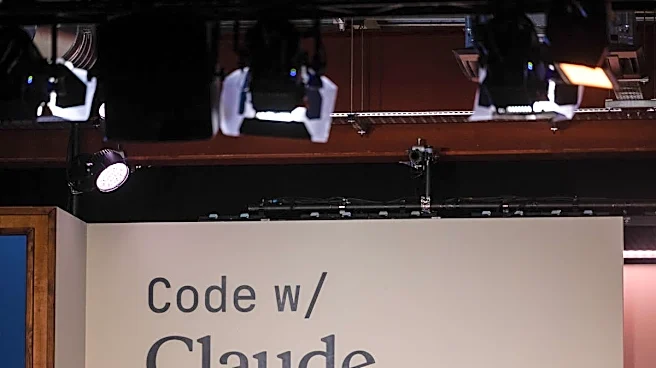
Eli Lilly, Bristol Myers Squibb (BMS), and Incyte have announced new partnerships to enhance the integration of artificial intelligence (AI) in drug development. BMS has partnered with Anthropic to deploy the AI company's Claude model across its drug development workflow,
aiming to streamline operations and improve data management. Eli Lilly has teamed up with Collaborative Drug Discovery to integrate its AI engine, Lilly TuneLab, into CDD Vault, facilitating secure data sharing and collaboration in drug discovery. Incyte has expanded its collaboration with Genesis Molecular AI, investing $120 million upfront to target additional diseases using advanced machine learning models. These partnerships highlight the growing role of AI in the biopharma industry, as companies seek to leverage technology to improve efficiency and innovation in drug development.
Why It's Important?
The integration of AI in drug development is significant as it promises to enhance efficiency, reduce costs, and accelerate the discovery of new treatments. By utilizing AI, companies like Eli Lilly, BMS, and Incyte can better manage and analyze large datasets, leading to more informed decision-making and potentially faster time-to-market for new drugs. This technological advancement is crucial for maintaining competitiveness in the biopharma industry, where innovation is key to addressing complex health challenges. Additionally, these partnerships reflect a broader trend of AI adoption across industries, underscoring its potential to transform traditional business models and drive economic growth.
What's Next?
As these AI partnerships progress, the biopharma industry may see increased collaboration between technology and pharmaceutical companies. This could lead to more comprehensive data-sharing agreements and the development of new AI tools tailored to specific drug development needs. Stakeholders, including investors and regulatory bodies, will likely monitor these developments closely, as successful integration of AI could set new standards for drug discovery and development processes. Furthermore, the outcomes of these partnerships may influence future investment decisions and strategic planning within the industry.