








What's Happening?
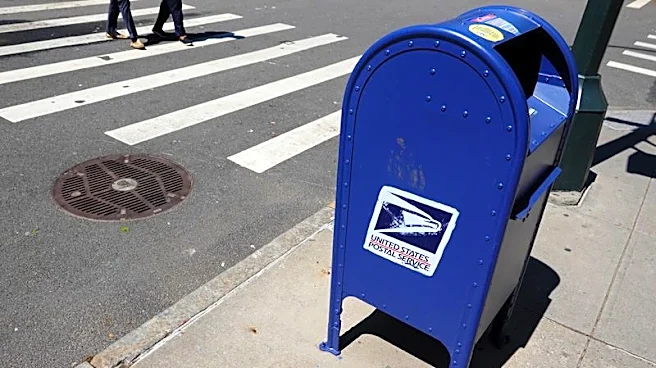
The U.S. Postal Service (USPS) and DHL eCommerce have announced a significant expansion of their long-standing parcel delivery partnership. This new agreement, valued at over $10 billion, marks a pivotal development in their 25-year relationship, focusing
on enhancing their U.S. e-commerce strategies. Under this agreement, DHL eCommerce will continue to rely on USPS for final-mile delivery of its domestic parcels in the United States. This partnership is designed to support substantial volume growth over the next decade. DHL will manage the initial stages of parcel handling, including pickup, sortation, and linehaul transportation, before integrating parcels into the USPS network for final delivery. This collaboration allows DHL to avoid the high costs of building a nationwide residential delivery network from scratch, while USPS leverages its extensive reach to over 170 million addresses and more than 41,000 ZIP Codes nationwide.
Why It's Important?
This partnership is crucial as it reflects a broader shift in the parcel delivery market, where companies are increasingly focusing on their core strengths rather than building redundant infrastructures. For USPS, this agreement is a strategic move to reposition itself as a key player in the logistics sector, especially as traditional mail volumes decline. By expanding its parcel capacity by 40% over the past four years, USPS aims to become an indispensable infrastructure for e-commerce companies. For DHL, the partnership provides a cost-effective solution to enhance its delivery capabilities without the need for significant capital investment. This collaboration underscores the growing importance of network specialization and operational efficiency in the parcel delivery industry, particularly as labor costs and route inefficiencies continue to challenge last-mile delivery economics.
What's Next?
The agreement sets the stage for further integration and specialization within the parcel delivery industry. As USPS continues to expand its network, including Local Processing Centers and Sorting and Delivery Centers, it is likely to attract more partnerships with other e-commerce and logistics companies. DHL plans to double its business by 2030, making the reliability of last-mile delivery a critical component of its growth strategy. This partnership may also prompt other logistics providers to seek similar collaborations, emphasizing the importance of leveraging existing infrastructures to enhance service delivery. The focus on long-term relationships and trust, as highlighted by USPS Postmaster General David Steiner, suggests that similar strategic alliances could become more common in the industry.
Beyond the Headlines
The partnership between USPS and DHL eCommerce highlights a significant trend towards interoperability in parcel delivery networks. As companies seek to optimize their operations, the emphasis is shifting towards leveraging existing infrastructures rather than duplicating efforts. This approach not only reduces costs but also enhances service efficiency and reliability. The agreement also reflects a strategic shift for USPS, which is increasingly positioning itself as a foundational infrastructure within the U.S. e-commerce ecosystem. This could lead to a reevaluation of how postal services are perceived and utilized in the digital age, potentially influencing public policy and regulatory frameworks surrounding postal and logistics services.