
What's Happening?
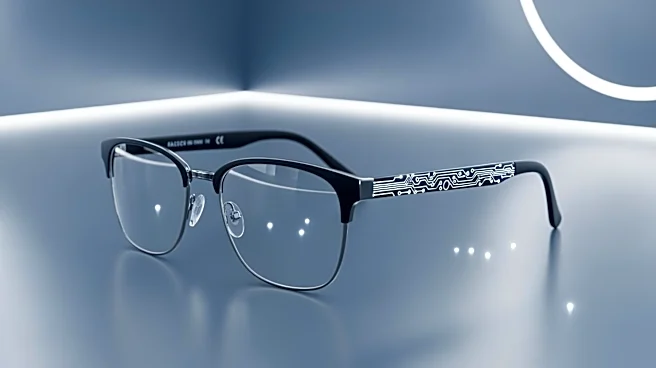
Meta, in collaboration with Ray-Ban, has announced the launch of two new prescription smart glasses models, set to be available on April 14, 2026. These models, named Blayzer Optics and Scriber Optics,
are designed specifically for prescription wearers, featuring adjustable temple tips, interchangeable nosepads, and a custom action button. Priced at $499, the glasses aim to make smart eyewear more accessible to the billions who require corrective lenses. This launch marks a significant shift as Meta and EssilorLuxottica integrate mainstream opticians into the smart-glasses supply chain, potentially changing the purchasing landscape for connected eyewear. The announcement has sparked mixed reactions, with tech reviewers praising the optical focus and privacy advocates expressing concerns over potential feature creep, such as facial recognition.
Why It's Important?
The introduction of prescription smart glasses by Meta and Ray-Ban is poised to significantly impact the smart eyewear market. By targeting prescription wearers, Meta addresses a key bottleneck that has previously limited the adoption of smart glasses. The pricing strategy, which undercuts earlier display models, coupled with expanded distribution to optical chains, could accelerate the transition of smart glasses from niche products to mainstream consumer devices. This development is likely to benefit optical retailers, who may see increased demand for fitting services, and could prompt competitors to introduce their own prescription-ready models. The broader availability and lower entry pricing may drive faster product cycles and more optical partnerships, potentially reshaping the market dynamics.
What's Next?
As the new prescription models become available, optical retailers are expected to promote fitting services alongside technical specifications. This could lead to increased consumer interest and adoption of smart glasses. Competitors may respond by launching their own prescription-ready models, potentially intensifying market competition. If Meta's pricing and distribution strategy proves successful, smart glasses could become a common purchase for individuals who already require prescription lenses, further integrating augmented reality into everyday life. The market may witness a shift from early adopters to widespread consumer acceptance, with smart glasses becoming a staple in eyewear stores.
Beyond the Headlines
The launch of prescription smart glasses raises important questions about privacy and data security. As these devices become more integrated into daily life, concerns about facial recognition and data collection may grow. This could lead to increased scrutiny from privacy advocates and potentially influence regulatory measures. Additionally, the collaboration between Meta and Ray-Ban highlights the growing intersection between technology and fashion, suggesting a trend towards more personalized and stylish tech products. This development may also spur innovation in wearable technology, as companies seek to balance functionality with aesthetic appeal.